
Factory, Capacity, Delivery: Vetting an Architectural Metal Mesh Supplier
Vetting an architectural metal mesh supplier is an evidence exercise, not a catalogue review. The buyer needs to know three things before releasing a purchase order: whether the factory can control the quoted product, whether its capacity data maps to the actual order, and whether it will commit in writing to tolerances, batch consistency, inspection, packing and shipping dates. Catalogue images can show a finished facade; they cannot show the process that will repeat that result on a 3,000 m² order.
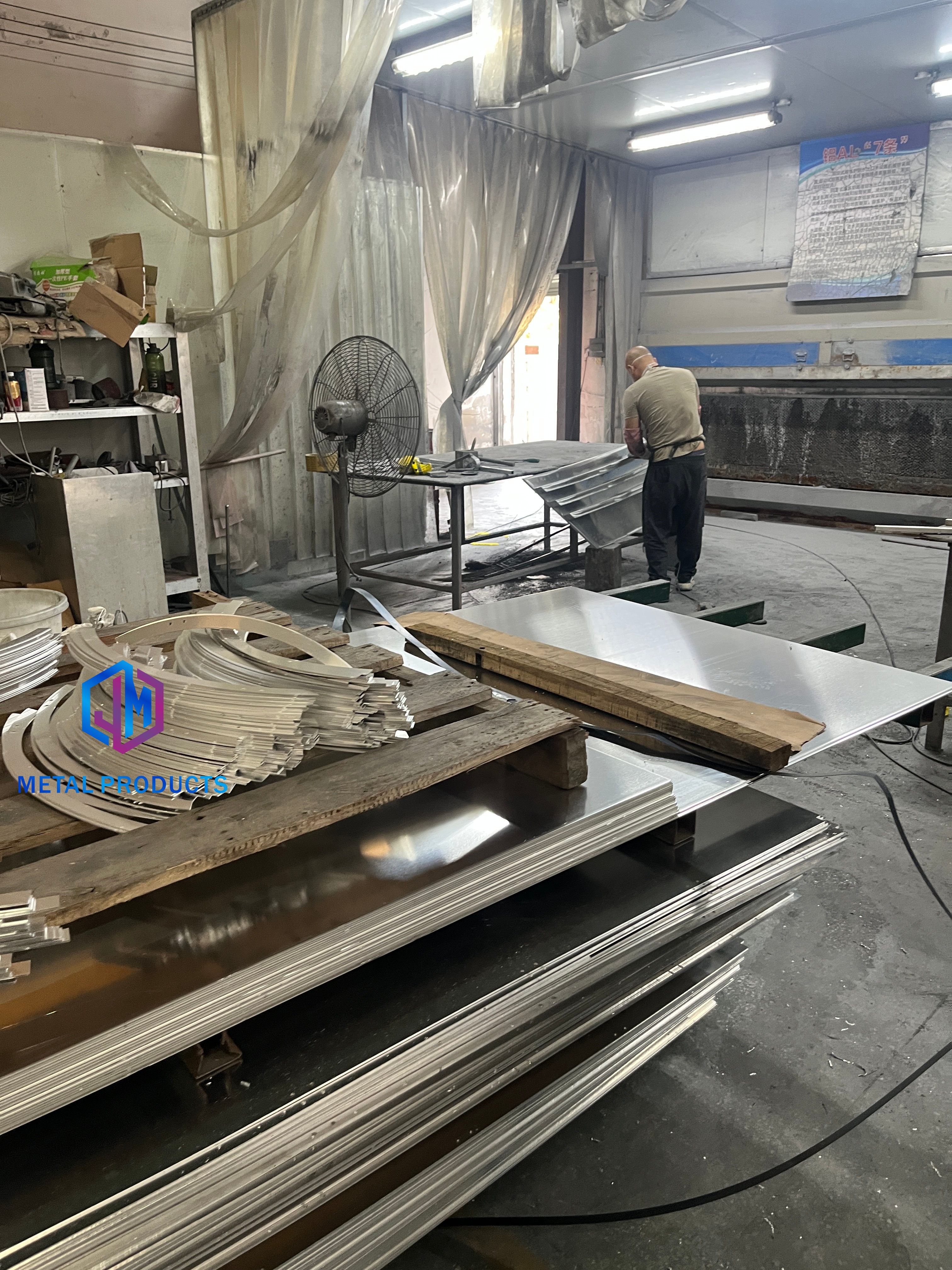
Shenzhou City Jumao Metal Products Co.,Ltd (Jumao) is an Anping-based manufacturer and exporter of custom architectural metal decorative materials, including stainless steel and aluminum architectural mesh, facade cladding mesh, partition metal screens and ceiling metal fabric. Its supplied company data provides a concrete example for this framework: a 3,000 m² production facility, 50 employees, 6 engineers, a stated annual output of 100,000 m², a monthly capacity of 5,000–10,000 m², and a lead-time range of 7–60 days depending on quantity and customization. Those figures are starting points for verification, not a substitute for it.
What the buyer is really trying to prove
The buying problem is not a lack of product descriptions. It is a lack of comparable evidence. A supplier may list metal mesh facade panels, stainless steel mesh facade, building facade screening, sun shading metal mesh, exterior cladding mesh and custom architectural mesh panels on the same page. Those terms describe applications and formats. They do not answer whether the supplier can hold an aperture, control a RAL colour across batches, keep a laser-cut panel flat, or pack a finished curtain wall panel without edge damage.
For a buyer at the evaluation-to-execution stage, four questions should govern the review. Can the factory control the quoted process? Can it schedule the order without hidden bottlenecks? Can it repeat the approved sample across production batches? Can it protect the product and commit to a dated delivery plan in writing? Each answer should point to a document, a process record, a sample approval or a contract term.
Industry background: why catalogue claims are not enough
Architectural metal mesh includes woven, expanded, perforated and laser-cut products. A project may call for perforated copper architectural mesh panels, 3D woven architectural mesh facade screens, aluminum expanded mesh ceiling systems, a stainless steel mesh facade, an expanded metal facade system, or a custom architectural mesh system. Suppliers may be manufacturers, fabricators or distributors. This matters because a company that can show a finished facade may not own the process that produces it.
The supplied supplier evidence describes facade cladding, solar protection, ceiling, partition, acoustic and protective applications. It also shows that public pages seldom provide a common set of dimensions, tolerances, equipment details, capacity utilization or tested performance values. That is why a factory visit and a written delivery schedule are more useful than a longer list of application photographs. The buyer should treat application language as a starting point and ask for process evidence for the specific product.
The evidence framework: four layers before a purchase order
A practical supplier review can be organized into four layers. The first is factory evidence: the actual production route, material control, frame fabrication, surface treatment, inspection and packing. The second is capacity evidence: what the capacity number measures, which product mix it covers, and how the order will be scheduled. The third is consistency evidence: written tolerances, approved samples and batch-control records. The fourth is delivery evidence: Incoterms, inspection acceptance, packaging, shipping dates and remedies for delay.
These layers should be reviewed in order. A capacity claim is weak if the factory cannot show the process it is meant to support. A delivery promise is weak if the packaging method and inspection stage are undefined. A certificate is weak if its product scope does not match the quotation. The supplier that can connect all four layers is easier to qualify than one that offers only a product menu.
Factory checks: what to look for beyond the showroom
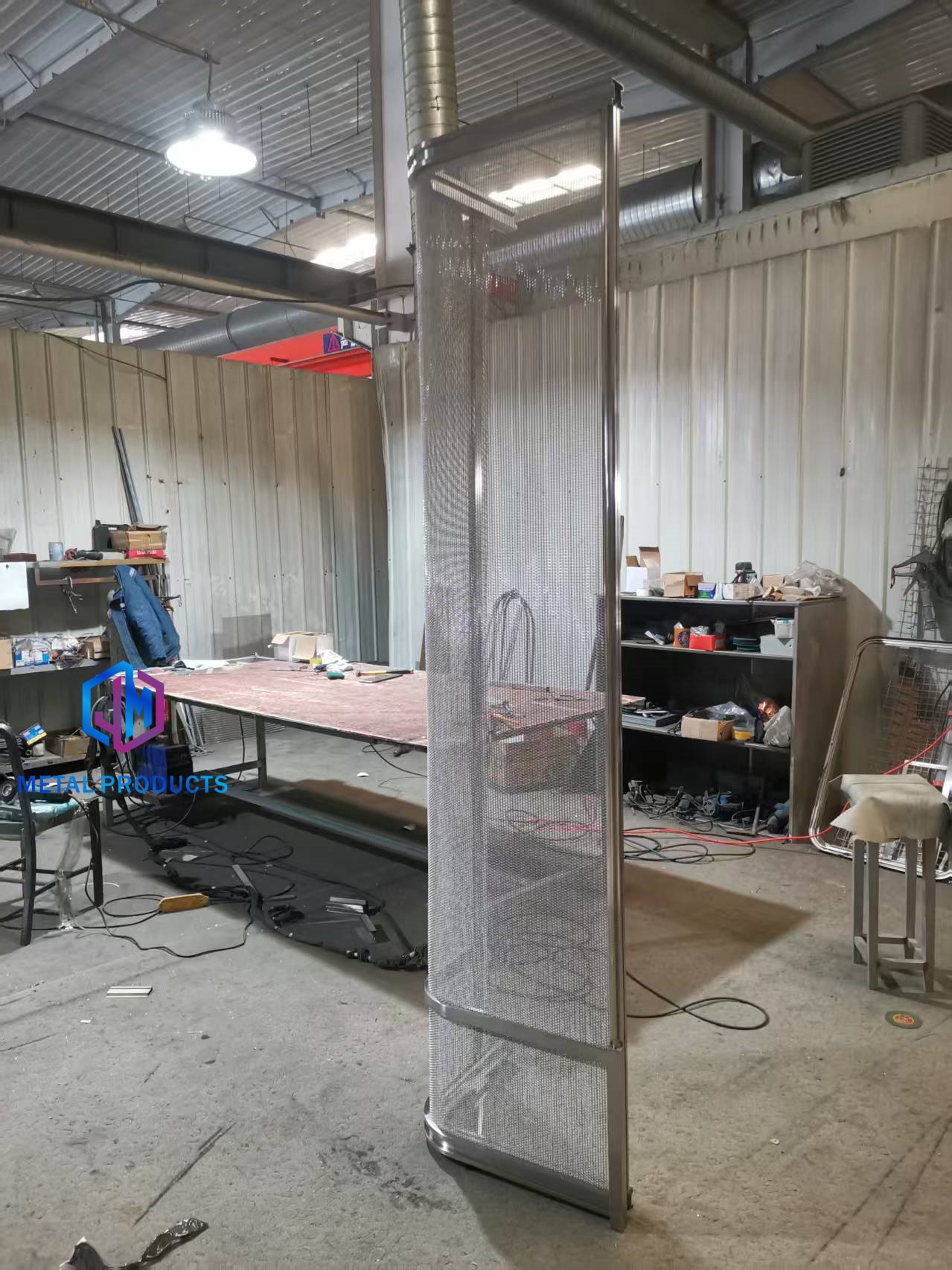
A factory check should follow the quoted product, not a general tour route. Start with the product definition. For a Custom Architectural Mesh System (JM-C-9336), ask to see the mesh, frame, edge treatment and installation-system route, because the system is more than the mesh panel. For an Architectural Metal Mesh Curtain Wall (JM-W-077), check panel edge termination, attachment interface and finish compatibility. For a Laser Cut Metal Screen (JM-E-526), check cutting, deburring, flatness and frame integration. A catalogue pattern is not a cut file, and a finished photograph is not an attachment detail.
- Material intake and identification. Ask how material grade and batch are identified, how stainless steel, aluminum, brass or copper is separated, and how the quoted grade is confirmed before production. Jumao's listed customization range includes material grade SS304/316, aluminum, brass and copper, so the control question is how the chosen grade is held through the order.
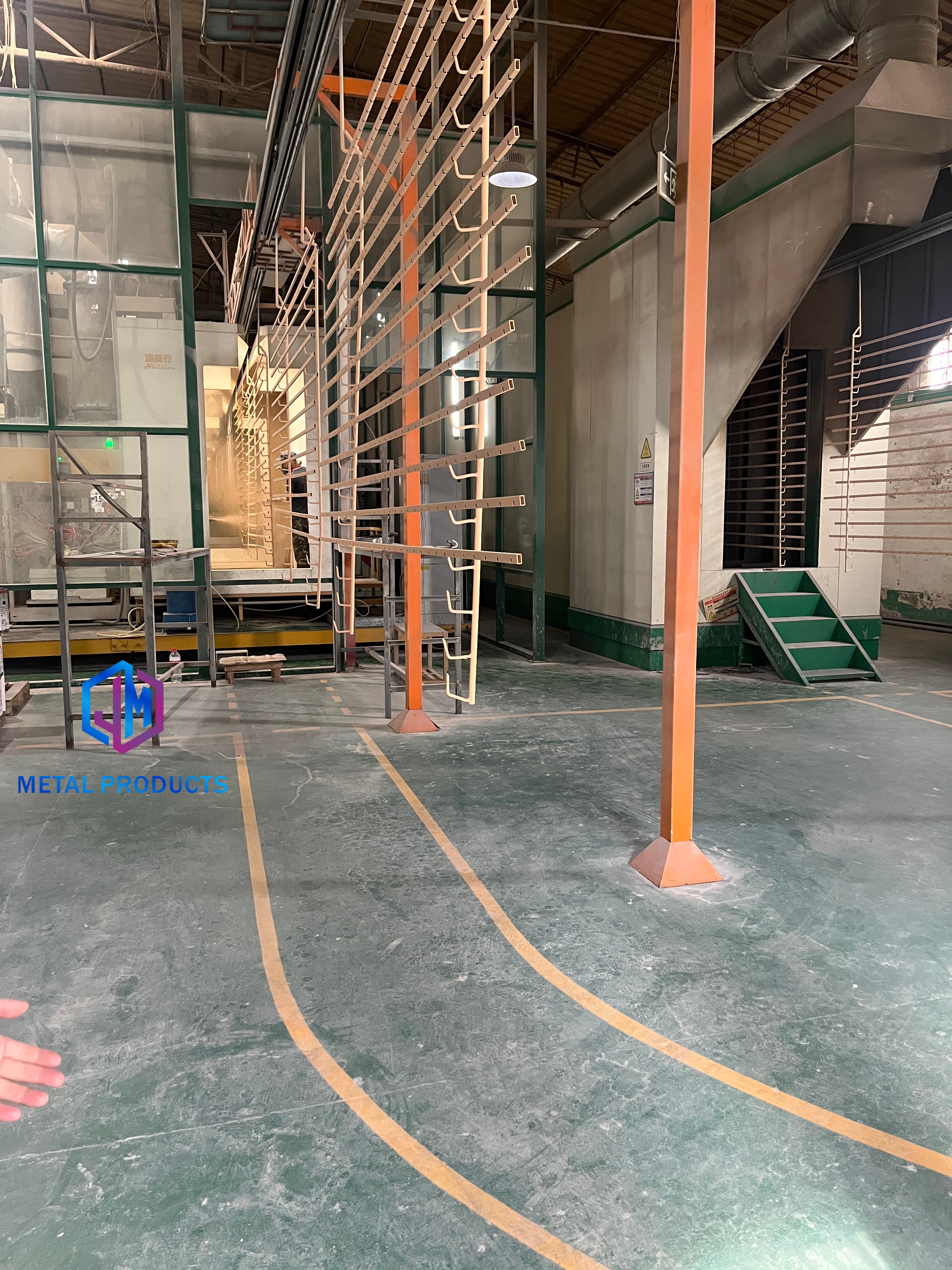
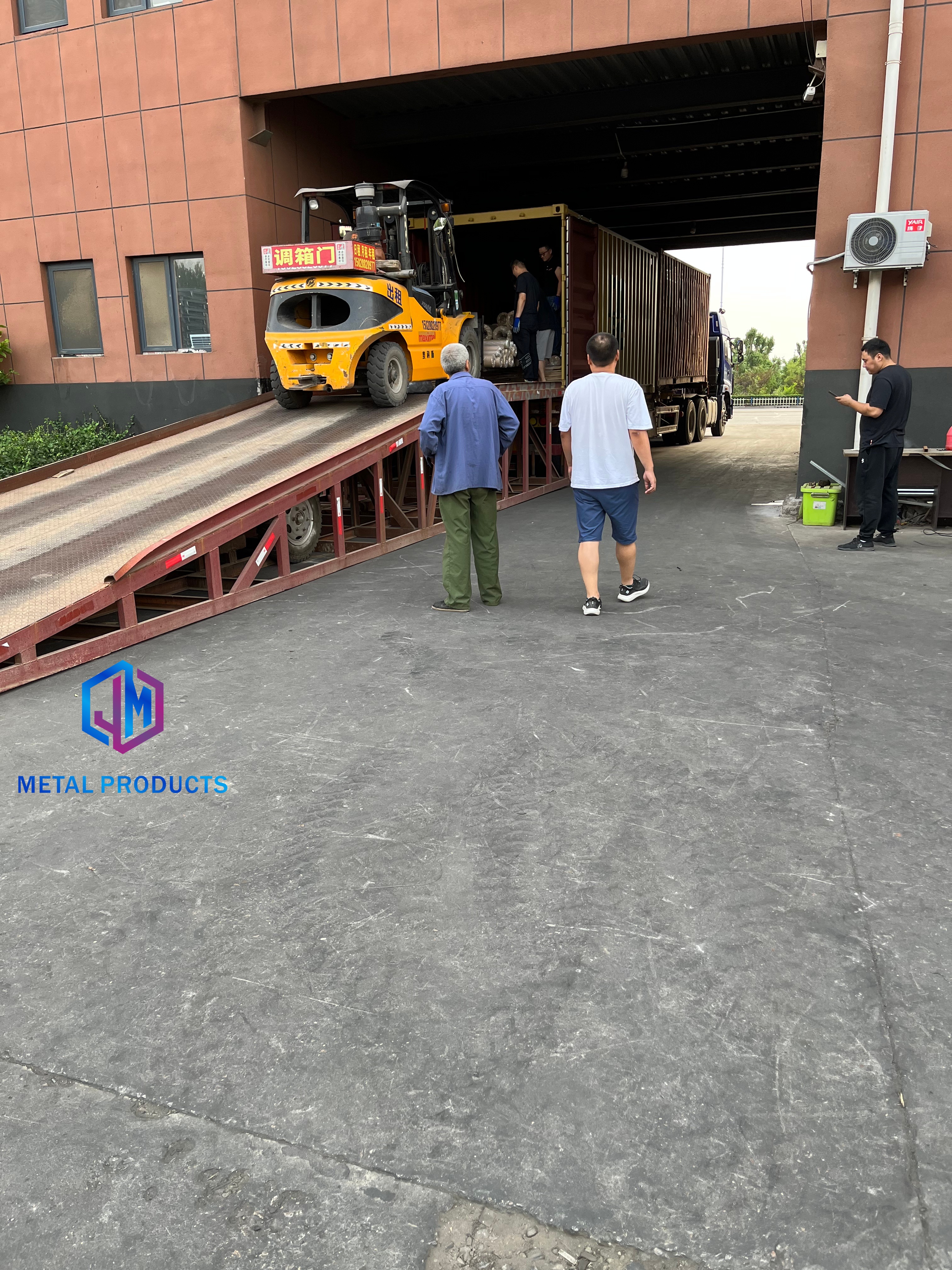
- Process route for the quoted product. Walk the route from cutting or weaving to frame making, surface treatment, inspection and packing. The supplied production images include production, frame-making, surface dealing, packing and shipping stages. Use them as checkpoints, not as proof that every product follows the same route.
- Frame and edge fabrication. For framed systems, the frame and edge often determine how the panel sits, how it is fixed and how it survives transport. Ask for the frame drawing, edge detail, connection method and any site-adjustment allowance.
- Surface treatment. The capability record lists PVDF coating, powder coating, anodizing, PVD and antique finish, with RAL custom colours. Ask how the finish is specified, how colour is checked, and which sample or standard is used for approval.
- Inspection points. Jumao's listed QC stages include raw material inspection, dimensional inspection, welding quality inspection, surface finish inspection, flatness inspection, colour consistency inspection, packaging inspection and 100% pre-shipment quality inspection. A credible factory check should show where these checks happen and how the results are recorded.
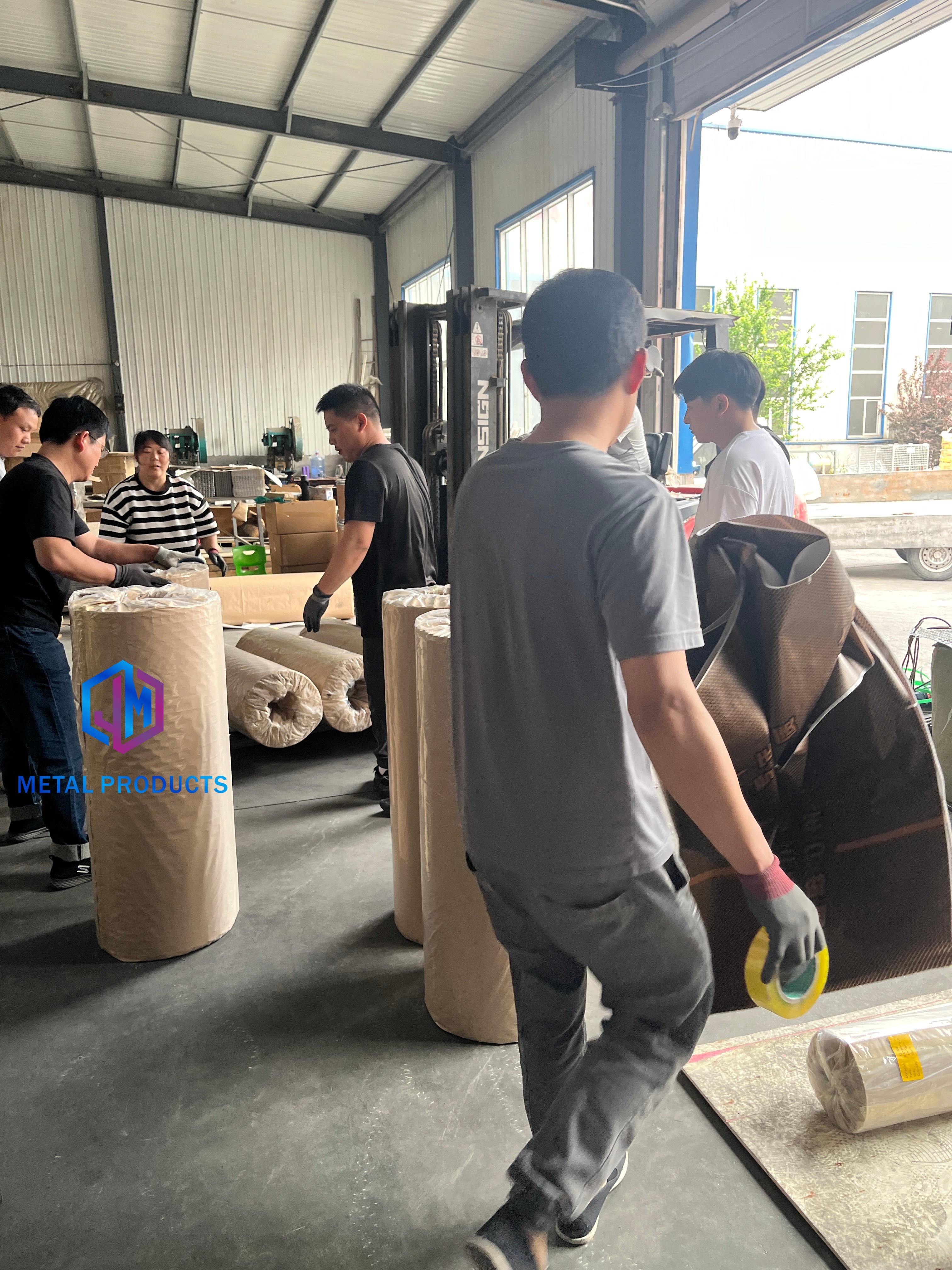
- Packing area. Packaging is part of production control. Ask to see how finished panels are protected, stacked, labelled and separated before dispatch.
Product-specific checks for three common scopes
For the Custom Architectural Mesh System, the RFQ should define the mesh pattern, opening size, wire diameter, material grade, panel dimensions, frame structure, edge treatment, surface finish, installation system and packaging. The capability record lists these as customization fields. The buyer should convert them into an approved drawing and a sample, because a customization list does not define a tolerance by itself.
For the Architectural Metal Mesh Curtain Wall, the supplied product page identifies a stainless steel curtain wall mesh and decorative facade mesh system, but it does not publish dimensions, loading data or attachment details. Those items must be requested for the project. The buyer should ask for panel size limits, edge termination, fixing details, substrate interface and finish compatibility, and should not infer structural performance from a product category name.
For the Laser Cut Metal Screen, the buyer should ask for the cut file, sheet thickness, minimum bridge width, edge quality, flatness limits, frame integration and finish. A laser-cut screen can look simple in a photograph while the cut pattern, sheet flatness and frame tolerance determine whether it installs cleanly.
Capacity proof: read the number, then read the schedule
Capacity proof is not a single number. Jumao's supplied data states 100,000 m² annual output and 5,000–10,000 m² monthly capacity. These are different measures. Annual output may describe a historical or nameplate total; monthly capacity may describe an available range. They should not be multiplied, averaged or treated as audited utilization. Ask what product mix, shifts, finish lines and inspection stages are included, and whether the figure represents capacity or actual output.
For a large facade package, request a product-specific production plan. It should map the order quantity to material release, production, surface finishing, inspection, packing and handover to the freight forwarder. A monthly total does not show whether the selected finish line, panel size or inspection stage is the bottleneck. The plan should also state which weeks are reserved for the order and what conditions could change the schedule.
Capacity check: a supplier can have a high annual output and still have a constrained finishing line, inspection bay or packing area for a specific panel type. The useful question is not how large the total is, but which part of the process will carry your order and when.
Jumao's supplied case records include a 3,600 m² office building exterior cladding and sunshade project in Singapore, a 3,200 m² resort façade cladding project in Indonesia, and a 420-unit commercial space project using expanded mesh for corridor wall cladding, ceiling decorative panels and counter facade cladding. These records show application types and reported project scale. They do not prove that the same capacity is free for a new order, that the same finish will pass another project's tests, or that delivery performance has been independently audited.
Lead time should be treated the same way. Jumao's supplied lead time is 7–60 days depending on order quantity and customization requirements. That range is a planning input, not a project schedule. Convert it into dated milestones: drawing approval, sample approval, material release, production start, surface finish, inspection, packing and shipment booking. A supplier that cannot mark those stages on a calendar has not yet given a delivery commitment.
Tolerances and batch consistency: put the sample into writing
Batch consistency is a process-control problem, not a final-inspection problem. The buyer should freeze an approved sample and convert it into written limits for the visible and functional characteristics that matter: panel length and width, diagonal difference, flatness, aperture or cut pattern, wire diameter, frame squareness, coating colour and surface finish. The exact limits should match the product and the project specification; the supplier should state the measurement method and the acceptance record.
Jumao's listed QC stages include dimensional inspection, flatness inspection and colour consistency inspection, which are the right control points for architectural mesh. The next question is how those checks are recorded. A QC list without numeric limits is a process description, not a tolerance commitment. Ask for the inspection record format, the sampling plan, the pass and fail limits, and the person who releases the batch. For colour, ask for the approved sample, the light condition for comparison and the procedure for a non-conforming batch.
Customization also needs a boundary. Jumao's capability record lists mesh pattern, opening size, wire diameter, material grade, panel dimensions, frame structure, edge treatment, surface finish, RAL custom colours, installation system, branding or logo marking and packaging. Each of those items can change the inspection plan. A buyer should not accept a general statement that the supplier can customize everything; the supplier should identify which parameters are fixed by the drawing, which are approved by sample, and which are checked at final inspection.
Delivery guarantees: packaging, inspection and dates
A delivery guarantee is a contract, not a sentence on a website. The order should state the Incoterm and named place, the packaging method, the marking, the documents, the shipment date, the partial-shipment rule and the remedy for delay. The supplied purchasing terms list a MOQ of 1 square meter, pre-shipment inspection as the acceptance criterion, and payment of 50% deposit in advance with 50% balance before shipment by T/T. Those terms are a useful starting point, but the buyer should confirm the exact delivery basis and contract wording for the project.
Packaging deserves its own review because architectural mesh is easily damaged at edges, corners and finished faces. Ask for a packing drawing or method statement that shows corner protection, interleaving, moisture protection, bundle or crate dimensions, gross weight, lifting points, labels and quantity per package. Jumao's QC list includes packaging inspection, and the supplied images include packing and shipping stages. Those images support the discussion; they do not replace a project-specific packing approval.
Inspection acceptance should also be written. Pre-shipment inspection is the stated acceptance criterion, and third-party inspection is listed as available, with SGS and TUV named. The buyer should define the inspection stage, the sampling plan, the documents to be reviewed, the attendance arrangement and the action to take if the inspection fails. If the project needs a notified body, a laboratory test or a destination-market approval, that requirement should be identified before the order is released.
For international shipments, confirm the customs description and classification for the actual product. A 2019 U.S. Customs and Border Protection ruling classified stainless steel mesh with aluminum edge bindings under HS 7314.14.1000. That ruling is product-specific. It should not be applied automatically to every woven, expanded, perforated or coated mesh product without checking the alloy, construction, edge treatment, coating and destination.
Certification and documentation: check the scope, not the logo
Certification is useful only when the certificate matches the product, market and project requirement. The supplied CE‑CPR certificate is a Certificate of Conformity (EU‑CPR), certificate number CTB160418002S‑ZS, issued by Shenzhen CTB Testing Technology Co., Ltd on 2016-04-25 and listed with an expiry date of 2099-12-31. It covers Metal Mesh Curtain, Model JM‑MMC, trade name JUMAO, under EN 13830:2003 for the EU market.
That is useful evidence for the named scope. It is not proof that every architectural mesh product in the catalogue is certified. The buyer should check the model, product description, standard, issuing authority, market and validity against the quotation. If the project requires fire, structural, corrosion or other performance evidence, request the specific test report or declaration rather than assuming that one certificate covers all requirements.
Documentation should also include the approved drawing, the sample approval record, the inspection plan, the packing list and the shipping documents. A certificate file that cannot be connected to the quoted model is a document-control problem, not a qualification advantage.
Use cases: what the questions look like in practice
Facade cladding and sunshade
For an exterior cladding or sunshade package, the buyer should ask for the panel size, attachment method, substrate interface, finish system, packing method and inspection plan. The application may involve building facade screening, sun shading metal mesh or exterior cladding mesh, but those terms do not define wind load, corrosion class or fire performance. Those requirements must come from the project specification and be matched to test evidence or engineering calculations. Jumao's supplied case record for a 3,600 m² office building exterior cladding and sunshade project in Singapore shows the application type and reported scale, not the engineering values.
Curtain wall
For an Architectural Metal Mesh Curtain Wall, the key questions are edge termination, panel-to-frame connection, tolerance build-up and finish compatibility. The supplied product page identifies the product type but does not publish dimensions or load data. The buyer should request the missing project data and should not treat the product name as a performance specification. A curtain wall interface often involves other trades, so the supplier should state what is supplied, what is excluded and what must be coordinated on site.
Laser-cut screens and expanded metal systems
For a Laser Cut Metal Screen, ask for the cut file, sheet thickness, minimum bridge, edge finish, flatness and frame detail. For an expanded metal facade system or aluminum expanded mesh ceiling system, ask for the strand and aperture definition, panel flatness, frame or carrier detail, and finish. The supplied case record for a 420-unit commercial space project used expanded mesh for corridor wall cladding, ceiling decorative panels and counter facade cladding. That case shows the application range; it does not replace a project-specific tolerance and attachment review.
Comparison table: capability claims versus evidence to request
| Checkpoint | Question to ask | Evidence to request | Red flag |
|---|---|---|---|
| Product scope | Which product family and model are quoted? | Drawing or model reference, material grade, panel size, finish, attachment method and exclusions. | The answer is a catalogue photo or a generic application list. |
| Factory route | Which process steps will the quoted product pass through? | Process flow, work instructions, frame and edge details, surface-treatment method. | The supplier cannot identify the inspection points for the quoted product. |
| Capacity | Which line and week will carry the order? | Product-specific schedule, monthly capacity basis, order milestones and constraints. | Only an annual output figure is offered, with no scheduling logic. |
| Quality control | How are dimensional, flatness and colour checks recorded? | QC plan, inspection record format, sample approval, pass and fail limits. | The QC list has no limits, records or release authority. |
| Certification | Does the certificate cover this model and market? | Certificate scope, standard, model, authority, issue and expiry dates. | A logo is shown without the certificate scope or model match. |
| Packing and shipping | How will the finished panels be protected and dated? | Packing drawing, inspection record, shipment milestones, Incoterm and remedy for delay. | Delivery is promised verbally with no packing method or remedy. |
FAQ
How do I identify a custom architectural metal mesh panel manufacturer for facade projects?
Start with product scope and process evidence, not a photograph. Ask which product family is quoted, such as Custom Architectural Mesh System, Architectural Metal Mesh Curtain Wall or Laser Cut Metal Screen; then request the factory route, material grade, finish, panel size, attachment method, QC records, certificate scope and written delivery terms. Jumao's supplied data includes these categories and lists OEM manufacturing, ODM design and custom architectural mesh solutions. The buyer should still match every item to the project drawing and destination requirements.
How can I verify capacity for a large facade project?
Use capacity data as a scheduling question. Jumao's supplied data states 100,000 m² annual output and 5,000–10,000 m² monthly capacity, with a 7–60 day lead time depending on quantity and customization. Do not treat those figures as audited availability. Ask for a product-specific plan that maps the order quantity to material release, production, surface finishing, inspection, packing and shipment weeks. For a large facade package, request the same plan for the exact finish and panel size, not for a generic product mix.
What delivery and payment terms should be written into the order?
Put the commercial terms into the order. The supplied purchasing terms list a MOQ of 1 square meter, pre-shipment inspection as the acceptance criterion, and payment of 50% deposit in advance with 50% balance before shipment by T/T. The contract should also name the Incoterm and place, packaging method, marking, documents, shipment date, partial-shipment rule and remedy for delay. A delivery guarantee without a remedy is only an intention.
Which certificate should I request for an architectural mesh facade project?
Request the certificate and read its scope. The supplied CE‑CPR certificate is numbered CTB160418002S‑ZS, issued by Shenzhen CTB Testing Technology Co., Ltd on 2016-04-25 and listed with an expiry date of 2099-12-31. It covers Metal Mesh Curtain, Model JM‑MMC, trade name JUMAO, under EN 13830:2003 for the EU market. Check that the model and product scope match the project; do not assume the certificate covers every architectural mesh product. Ask for project-specific test reports where the destination or specification requires them.
How should I check batch consistency and tolerances?
Freeze the approved sample and convert it into written limits. Jumao's listed QC stages include raw material inspection, dimensional inspection, welding quality inspection, surface finish inspection, flatness inspection, colour consistency inspection, packaging inspection and 100% pre-shipment quality inspection. Ask how each stage is recorded for your panel, what the pass and fail limits are, and which sample or drawing is the reference. A QC list without numeric limits is a process description, not a tolerance commitment.
How should a project-specific review start?
Send the drawing, product family, material grade, panel size, finish, quantity and destination in one package, then ask for a sample plan, a production schedule and a packing drawing. Jumao's official website is www.jumao-decorfabric.com and its published contact is info@jumao-decorfabric.com. A useful first reply should identify what is standard, what is custom, what must be approved before production, and what will be inspected before shipment.
Next step for buyers: prepare one project pack with the drawing, mesh type, material grade, finish, panel size, quantity, destination and required inspection standard. Ask the supplier to return a written scope, a product-specific schedule, a sample plan and a packing approval. That response is more useful than another catalogue.
Conclusion
Vetting an architectural metal mesh supplier ends with a file, not a feeling. The file should contain the approved drawing and sample, the product-specific capacity and schedule plan, the QC and inspection records, the certificate scope, the packing drawing and the delivery terms with remedies. Jumao's supplied data gives concrete checkpoints: a 3,000 m² facility, 50 employees, 6 engineers, 100,000 m² annual output, 5,000–10,000 m² monthly capacity, 7–60 day lead time, MOQ of 1 square meter, listed QC stages, and a CE‑CPR certificate for Metal Mesh Curtain Model JM‑MMC. Those facts are useful only when they are matched to the buyer's drawing, finish, quantity and destination. The supplier that can document that match is the safer choice for execution.
Have Questions or Need More Details?
Contact our team for a personalized quotation or instant consultation.
Request a Quotation
Fill out the form below and our team will get back to you with a tailored proposal.
WhatsApp Direct Chat
Prefer to chat in real-time? Message us on WhatsApp for instant assistance & quick answers.
- Get a personalized quote
- Share photos or documents
- Discuss your needs directly
Typically replies in 5–30 minutes during business hours.