Metal Mesh Curtains 101: How Decorative Screens Define Interior Spaces
Metal mesh curtains are flexible decorative screens made of interlinked metal rings or coils, hung from ceilings, tracks or frames to separate, layer and soften interior space. They are specified where a solid wall would feel heavy and a fabric drape would look temporary: hotel lobbies, restaurants, retail floors, atria and showrooms.
This guide is written for readers meeting the product for the first time — architects at concept stage, interior designers, contractors pricing a fit-out, and importers adding a decorative line. It explains what interior mesh curtains are, the three systems that cover most briefs (metal coil drapery, metal ring mesh curtain and ceiling hanging mesh curtain), how light and texture behave around them, and what a realistic path from sample to installed, repeatable supply looks like.
One distinction matters from the start. Architectural metal mesh more often appears on the outside of a building as facade panels, sun shading or cladding. Inside, the same material family becomes a curtain: hung with slack, folded, tensioned or draped, and judged by how it moves light rather than how it resists weather.
Why a Wall Is Often the Wrong Answer
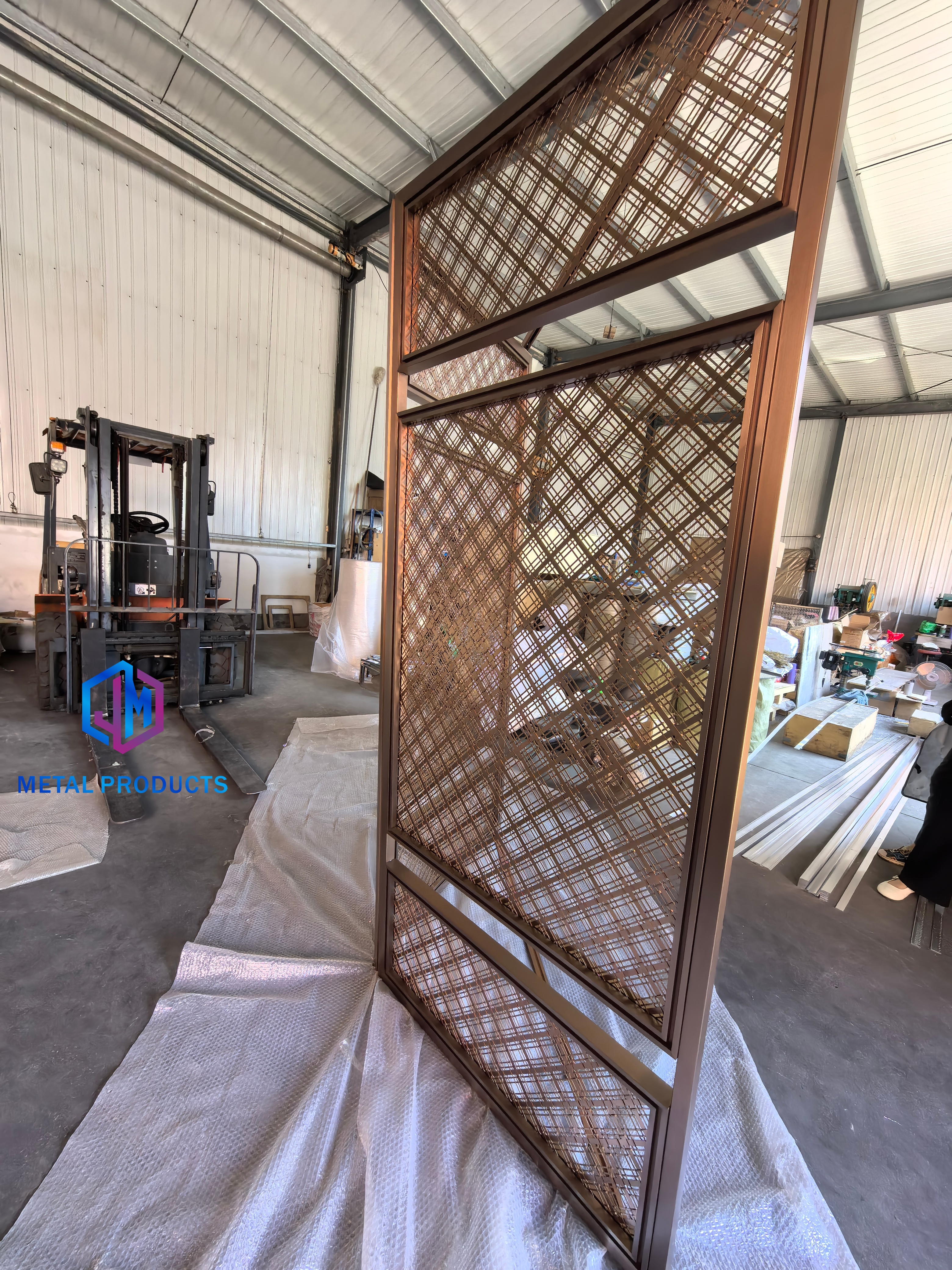
Most interior briefs that reach mesh begin with a conflict. The space must be divided without being closed. Retail floors need zones that can be re-merchandised seasonally. Restaurants need intimacy between covers while staff still see the room. Hotel lobbies need a focal element at double-height scale that does not read as a solid slab from the mezzanine.
A conventional partition solves separation and creates three new problems: it blocks daylight, it adds structural weight and fixing complexity, and it fixes the plan. Fabric drapery solves softness but usually reads as temporary, collects dust and rarely survives a commercial cleaning regime intact. A mesh curtain sits between the two positions. It is a screen, not a wall: open, light, dimensional and re-hangable.
The baseline used in this category is straightforward. Decorative metal mesh systems can reach up to 60% open area, weigh roughly 20–40% less than solid metal panels depending on specification, and are expected to perform for 20+ years. Custom panels are commonly produced in lengths up to 6 m, which is what makes a single continuous drape across an atrium or shopfront possible.
What newcomers usually get wrong is treating the product as flat cladding.
- Rigid thinking. A curtain has slack, fold and overlap; the drawing must show how it hangs, not only where it ends.
- Late mounting decisions. Track, frame and ceiling structure determine whether the mesh reads as a soft veil or a taut plane.
- Finish chosen from a colour chip. Coating and base metal together decide how the screen behaves under warm hospitality lighting.
- Service access ignored. Lighting, sprinklers and AV behind the screen still need reach.
Define the spatial effect first, then let the mesh type, aperture and mounting follow. That order keeps a decorative decision from becoming a site problem.
The Market Context Behind Interior Mesh Screens
Interior curtains are a small, design-led part of a much larger architectural mesh category, and the category is expanding. The global architectural metal mesh panel market was valued at USD 1.2 billion in 2024 and is projected to reach USD 2.5 billion by 2034, according to Reports and Data. Growth Market Reports estimates the metal mesh facade market at USD 10.59 billion by 2034, growing at a CAGR of 6.2%.
Product mix explains part of the momentum. Woven wire mesh accounted for approximately 43.2% of total metal mesh revenues in 2025, based on Dataintelo figures — woven and ring-based constructions are exactly the formats that translate most easily into hanging interior screens. Market Research Future describes Asia-Pacific as the fastest-growing region for facade systems, including metal mesh, on the back of urbanisation and infrastructure spending.
Supply is concentrated. China holds an estimated 65% share of global wire mesh supply in 2024, according to IBISWorld industry reporting, and the country's export value of steel wire products including wire mesh reached USD 14.5 billion in 2024 (Global Growth Insights). The Anping cluster in Hebei, where Jumao is based, hosted more than 3,600 specialised factories as of late 2024. Established international names in the sector include GKD, Haver & Boecker, Banker Wire and Cambridge Architectural; GKD alone held roughly 11.4% of the technical woven wire mesh sector in 2024, per Global Growth Insights.
For a specifier, the practical reading is simple. Interior mesh curtains are no longer a novelty imported for one flagship; they are a standard line item with multiple qualified sources, published standards and a mature customization supply chain.
Three Systems That Cover Most Interior Briefs
Most interior schemes are built from three product families. They share materials and manufacturing logic but behave differently in space, so the choice should follow the effect you want, not the price list.
Metal Coil Drapery
Metal coil drapery is made from interlinked metal coils that hang in vertical runs from a track or rail. It is the most curtain-like of the three: it folds, gathers and can be pulled aside, which makes it the natural choice for openings that must open and close — ballrooms, event floors, restaurant terraces and retail transitions.
Visually, coil drapery produces a fine, semi-transparent plane. Because the mesh can reach up to 60% open area, it reads as a veil rather than a barrier, and it is light enough — roughly 20–40% lighter than solid metal panels depending on specification — to be carried on lighter tracking. Custom runs up to 6 m long allow a single drape to cross a large opening without a horizontal joint.
Metal Ring Mesh Curtain
Ring mesh is built from individual metal rings, interlocked into a flexible sheet. It is the more tactile, jewellery-like option: at close range guests see the rings and the way they catch light; at distance the screen reads as a soft metallic surface. That double reading is why ring mesh appears so often behind reception desks, bar fronts and hotel lobby features where people stand within a metre of the material.
Ring mesh suits fixed or semi-fixed installations more than frequent opening and closing. It can be hung flat as a room divider, layered in front of a wall to add depth, or used as a decorative skin over a structural opening. Finishes such as PVDF coating or powder coating change the colour response without changing the geometry.
Ceiling Hanging Mesh Curtain
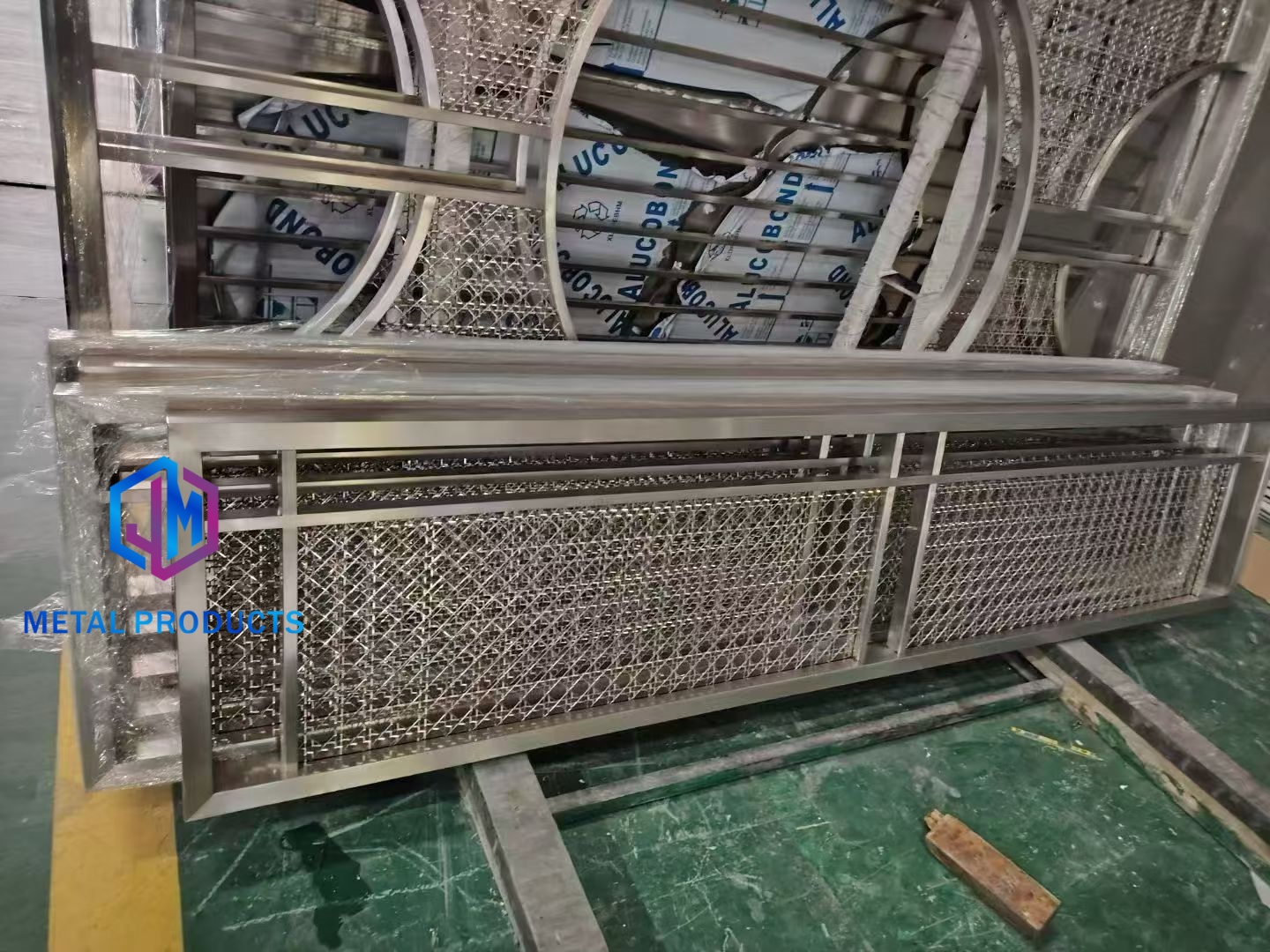
Ceiling-hung mesh turns the screen horizontal. Suspended in waves, coils or straight runs below a slab, it creates a secondary ceiling plane that hides services, softens downlight glare and adds texture at the height where guests actually look in double-height rooms.
This is where interior systems borrow directly from exterior practice: the same expanded and woven formats used for screening can be re-hung as a ceiling drape. Aluminum expanded mesh ceiling systems are a common route because aluminium keeps the suspended load manageable, while stainless steel versions are chosen where a cooler, finer appearance is wanted. Because these installations sit above occupied space, fixing detail and access to services behind the mesh matter as much as the pattern.
Materials, Finishes and What They Change
Material choice is a performance decision before it is an aesthetic one. Standard stainless steel mesh for facades typically uses Grade 316 for exterior corrosive environments and Grade 304 for interior applications, per Stainless Steel World guidance. Interior curtains therefore usually sit comfortably in 304, with 316 reserved for humid or chemically exposed interiors such as poolside bars and spa areas.
Standards give the specification a common language. Architectural mesh for facades often adheres to ASTM E2016 for industrial woven wire cloth, stainless steel materials are commonly specified under EN 10088, and expanded metal mesh in architecture falls under NAAMM EMMA division guidance. Coating performance is a separate control point: PVDF and powder coating quality — adhesion and colour consistency — should be verified rather than assumed.
From Sketch to Site: A Step-by-Step Specification Path
The sequence below is the working order that keeps a decorative mesh curtain buildable. Skipping a step usually reappears later as a site variation.
- Define the spatial job. Decide whether the screen separates, conceals, frames a view or simply adds texture. A screen that must hide a service zone needs a tighter aperture than one that only needs to soften a boundary.
- Survey the fixing condition. Record slab type, ceiling height, available structural anchors and the route for tracks or frames. A curtain is only as straight as its support.
- Choose the system family. Coil drapery for openings that move; ring mesh for close-range feature surfaces; ceiling-hung mesh for overhead planes and service concealment.
- Set aperture and open area. Openness controls visibility, light transmission and how much the screen reads as solid. Confirm the intended effect from a sample at real viewing distance, not from a photograph.
- Select material and finish. Match grade to exposure, then choose coating and colour under the project's actual lighting temperature.
- Detail hardware and edges. Track, tensioning, top and bottom termination, corner returns and access panels are designed, not improvised. Installation drawing verification at this stage prevents most on-site errors.
- Approve a sample or mock-up. Sign off mesh pattern, finish, ring or coil size and hanging behaviour before the full run is released.
- Manufacture, inspect and ship. Production should run under precision CNC manufacturing, strict dimensional tolerance control and in-process quality control (IPQC), with pre-shipment inspection before packing.
Designing for Repeat Supply, Not a One-Off Install
Hotels and retail groups rarely buy a mesh curtain once. A brand standard is written, a prototype property is fitted, and the same specification is then rolled out across refurbishments in different countries over several years. That changes what a buyer should evaluate.
The first requirement is consistency. Colour, ring or coil geometry and panel dimensions must repeat from lot to lot, otherwise the second property will not match the first under the same lighting. Coating adhesion and colour consistency inspection, together with 100% final dimensional and appearance inspection before shipment, is the control that protects a rolled-out brand standard.
The second requirement is a documented acceptance procedure. For orders, pre-shipment inspection forms part of the acceptance process, so the buyer verifies product before it leaves the factory rather than after it reaches site. Commercial terms support the same logic: MOQ from 1 square metre, delivery terms EXW, FOB, CFR or CIF, and payment at 50% deposit with 50% balance before shipment by T/T.
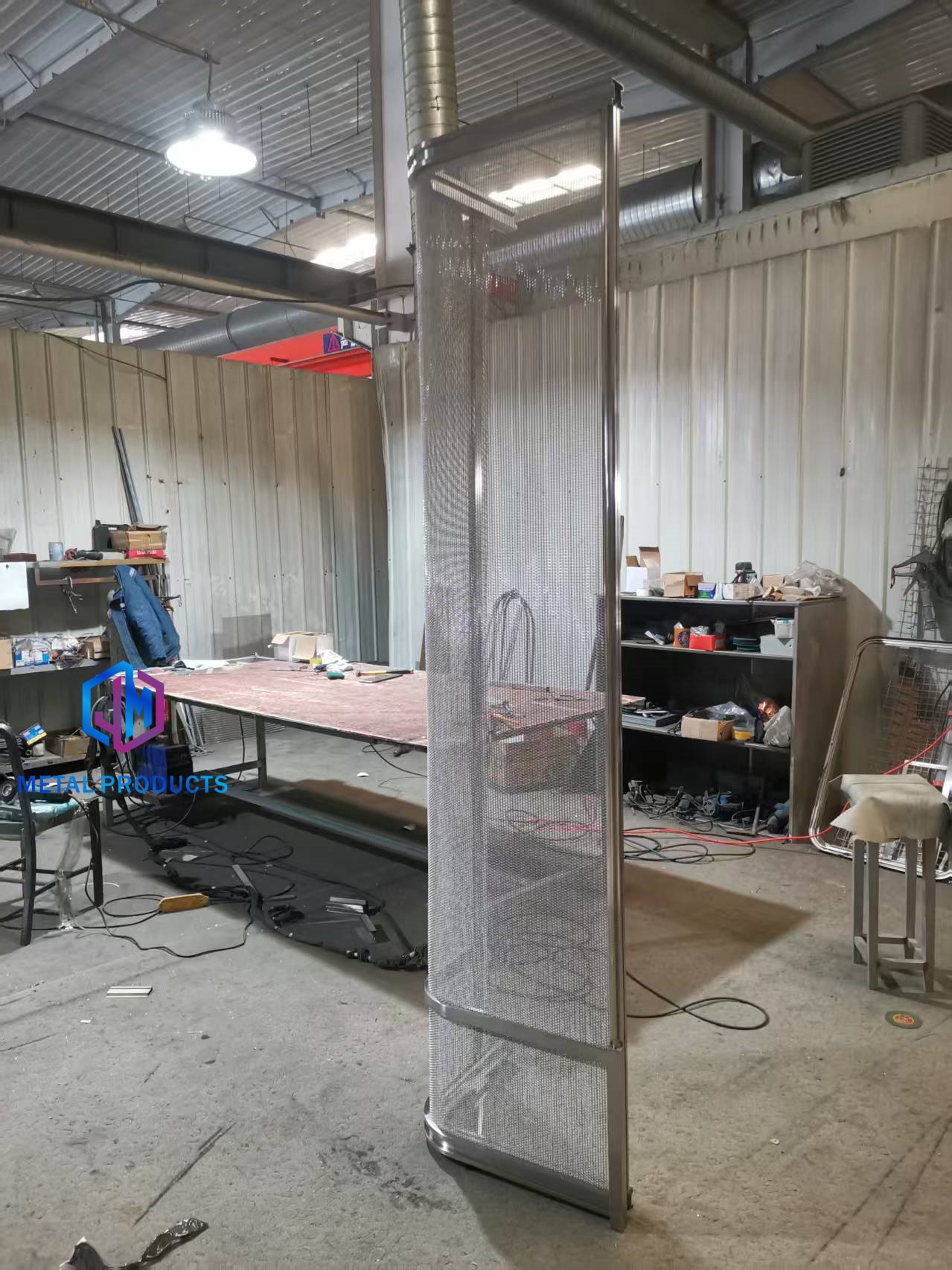
The third requirement is transport integrity. Large decorative panels and long drapes are vulnerable to deformation, which is why delivery risks are managed through customized protective packaging and protective export packaging. Deformation in transit is one of the recognised risk categories in this product, alongside corrosion, coating peeling, dimensional deviation, installation errors and weld defects — each with its own control: certified raw materials in SS304/316 and aluminium alloys, precision manufacturing, coating quality control, structural strength verification and installation manuals with technical guidance.
For distributors and importers, the same structure supports an OEM/ODM relationship rather than a single transaction. Jumao, formally Shenzhou City Jumao Metal Products Co.,Ltd, is a manufacturer and exporter based in Anping, Hebei, founded in 2016, operating a 3,000 m² facility with 50 employees, six engineers and annual output of 100,000 m². Its range covers architectural metal mesh, stainless steel decorative mesh and interior and exterior metal screens, with full OEM/ODM customization on material, size, weave pattern, PVDF coating and design drawings. Around 50% of output is exported to the Middle East, Southeast Asia, the European Union, North America, Australia and Africa — which is also the practical basis for supporting a multi-country rollout.
Where They Work: Hospitality and Retail Scenarios
Hotel lobbies and atria
A double-height lobby needs an element that holds the volume without blocking sightlines to reception. Ceiling-hung mesh creates the overhead plane; a coil drape or ring mesh feature anchors the vertical. Sun shading mesh used on glazed screens can reduce solar heat gain by up to 50% depending on mesh aperture and material, which is relevant where an interior screen also faces a glass wall.
Restaurants and bars
Mesh divides covers from circulation while staff keep visual control of the room. Ring mesh behind a bar front reads as a designed surface at close range; coil drapery can close a private dining zone in the evening and open it for daytime service.
Retail floors and shopfronts
Flexible screens let a store re-zone without rebuilding. A coil drape across a shopfront softens the boundary between window and floor, and ceiling-hung mesh can carry a display concept across a whole ceiling bay.
Malls, showrooms and wellness areas
In shopping centres, ceiling-hung mesh breaks up long ceiling runs and conceals services. In showrooms and spas, the same material provides a calm, textured backdrop that photographs well and needs only water or neutral detergent for routine cleaning.
Comparison: Coil Drapery, Ring Mesh and Ceiling-Hung Curtains
The three systems overlap in material but not in behaviour. The table below compares them on the criteria that decide an interior specification.
| Criteria | Metal Coil Drapery | Metal Ring Mesh Curtain | Ceiling Hanging Mesh Curtain |
|---|---|---|---|
| Dominant visual effect | Fine, semi-transparent vertical veil that folds and gathers | Tactile ring surface that catches light at close range | Secondary ceiling plane with texture and depth overhead |
| Typical mounting | Track or rail, with slack for opening and closing | Fixed top fixing or frame, hung flat or layered | Suspended from slab or ceiling grid in waves or runs |
| Light behaviour | Diffuses daylight and views; openness adjustable by gathering | Filters and reflects light through ring geometry | Softens downlight glare and conceals services above |
| Best-fit interior zones | Ballrooms, terraces, shopfronts, flexible zoning | Reception, bar fronts, lobby features, feature walls | Atria, restaurants, retail ceilings, showrooms |
| Customization levers | Coil size, width, length, finish, track detail | Ring size, wire diameter, finish, panel shape | Pattern, aperture, suspension layout, edge trim |
| Typical service expectation | Up to 60% open area; approximately 20–40% lighter than solid metal panels depending on specification; service life of 20+ years; custom sizes commonly up to 6 m long. Open structure reduces dust accumulation and is cleaned with water or neutral detergent. | ||
Against conventional alternatives, the trade-off is explicit. Initial material cost may be 10–25% higher than conventional perforated panels, while structural support requirements and long-term replacement frequency can be reduced depending on the design. Compared with solid partition systems and aluminium composite panels, a mesh curtain delivers transparency, ventilation and a lighter visual mass that a solid surface cannot reproduce.
Frequently Asked Questions
What material grades and standards should an interior metal mesh curtain meet?
Grade 304 stainless steel is the normal choice for interior applications, while Grade 316 is specified where interiors are corrosive or humid. Stainless steel mesh materials are commonly specified under EN 10088, woven wire cloth under ASTM E2016, and expanded metal under NAAMM EMMA guidance. Coating adhesion and colour consistency should be inspected as part of production control, not left to site approval.
Can coil drapery and ring mesh be customized in size, pattern and finish?
Yes. Customization covers material, size, weave pattern, PVDF coating and design drawings, with custom sizes commonly produced up to 6 m long. Jumao runs this through OEM/ODM projects with a six-engineer team and a 3,000 m² facility producing 100,000 m² annually, so a specification can be matched to a drawing rather than selected from a fixed catalogue.
What drives the cost of an interior mesh curtain installation?
Material grade, mesh type, open area, finish, panel size, hardware and installation labour are the main cost drivers. As a reference point, initial material cost may be 10–25% higher than conventional perforated panels, while structural support requirements and long-term replacement frequency can be reduced depending on the design. A service life of 20+ years and simple cleaning with water or neutral detergent belong in the same calculation.
Can we request a sample before committing to a project order?
Yes — sampling is a normal step before a specification is released, and the minimum order quantity is 1 square metre, which keeps the sample and mock-up stage practical. Sharing the intended viewing distance, lighting temperature and fixing condition lets the sample be judged as it will actually appear. Contact ViVi Su at info@jumao-decorfabric.com or +86-151-2783-7706 to arrange a sample or a quotation.
How are lead time and delivery risk managed on larger orders?
Production is controlled through precision CNC manufacturing, strict dimensional tolerance control and in-process quality control, with 100% final dimensional and appearance inspection before shipment. Delivery risks are managed with customized protective packaging and protective export packaging to prevent deformation in transit, and pre-shipment inspection is included in the acceptance procedure. Orders ship on EXW, FOB, CFR or CIF terms with 50% deposit and 50% balance before shipment by T/T.
Conclusion: The Screen Decides How the Room Feels
Interior metal mesh curtains are a simple idea executed with precision: interlinked rings or coils, hung so that light passes through and space is layered rather than blocked. The choice between metal coil drapery, metal ring mesh curtain and ceiling hanging mesh curtain is really a choice about movement, closeness and height — whether the screen must open, whether guests will touch it, and whether it hangs in front of them or above them.
Get the sequence right and the rest follows: define the spatial job, survey the fixing, choose the family, approve a sample at real viewing distance, then manufacture under documented inspection and pack for transport. That is also what makes the same specification repeatable across a hotel group or retail rollout, rather than a one-off installation that cannot be matched later.
Next Step: Sample, Drawing Review or Distributor Pack
Jumao supplies architectural metal mesh, decorative stainless steel mesh and interior and exterior metal screens with full OEM/ODM customization. For a project, send the opening dimensions, intended effect and finish direction for a quotation; for a brand standard or distributor programme, ask for the sample set and technical documentation.
Email: info@jumao-decorfabric.com · Tel / WhatsApp: +86-151-2783-7706 · Web: www.jumao-decorfabric.com
Have Questions or Need More Details?
Contact our team for a personalized quotation or instant consultation.
Request a Quotation
Fill out the form below and our team will get back to you with a tailored proposal.
WhatsApp Direct Chat
Prefer to chat in real-time? Message us on WhatsApp for instant assistance & quick answers.
- Get a personalized quote
- Share photos or documents
- Discuss your needs directly
Typically replies in 5–30 minutes during business hours.