Evaluating Mesh Manufacturers: Capability Checks for Large Facade Contracts
Large facade contracts are decided long before the first panel leaves the factory. A supplier wins a 3,000 m² mesh package not because its catalogue is the longest, but because its engineering interface, finish control and shipping discipline still hold up in month four of the project.
This guide is written for procurement managers, facade contractors and architects comparing mesh manufacturers at evaluation and pre-award stage. It sets out the capability checks — engineering support, finish quality, capacity, documentation and logistics — that separate a manufacturer who can deliver a large contract from one who can only deliver a convincing sample panel.
Two product families are useful reference points for what a fully integrated supplier looks like in practice. The Custom Architectural Mesh System (JM-C-9336) is a project-based architectural mesh solution covering woven, expanded, cable and ring mesh, with customized panel sizes and frame, clip or tension fixing systems. The Complete Metal Mesh Facade Solution (JM-E-7736) combines expanded mesh, woven mesh, cable mesh and perforated panels into a single facade package with customized engineering support.
Both are manufactured by Shenzhou City Jumao Metal Products Co.,Ltd (JUMAO), an architectural metal mesh manufacturer and exporter based in Anping, Hengshui, Hebei, China. Founded in 2016, JUMAO operates a 3,000 m² production facility and supplies stainless steel and aluminum architectural mesh, facade cladding mesh, partition metal screens and ceiling metal fabric for commercial building projects, exporting to the Middle East, Southeast Asia, the European Union, North America, Australia and Africa.
Why a Sample Panel Is Not a Capability Check
A sample panel proves that a manufacturer can produce one good panel. It does not prove that the same panel can be repeated 400 times, in the same color, to the same aperture tolerance, packed so it arrives undamaged, on a date that matches the site programme.
On large contracts, four failure modes account for most supplier problems:
- Production consistency. Aperture size, panel dimensions and strand or wire geometry drift between production runs when there is no dimensional inspection step in the process.
- Finish variation. PVDF, powder-coated, PVD and antique finishes are produced in batches. Without a color consistency check and a retained physical reference, wall-by-wall deviation becomes visible only after installation.
- Interface gaps. Mesh panels are only half the system. Frame structure, edge treatment, clip or tension fixing and installation guidance determine whether the panels actually fit the substrate designed by the architect.
- Schedule and logistics mismatch. A manufacturer with a strong catalogue but limited monthly output, or with weak packing, delays the entire envelope package rather than one elevation.
This is why evaluation should shift from product questions (“what mesh types do you make?”) to capability questions (“how do you control batch color, and what happens when a panel does not match the approved reference?”).
What the Architectural Metal Mesh Supply Market Looks Like in 2026
The demand side of this question is measurable. The global architectural metal mesh panel market was valued at USD 1.2 billion in 2024 and is projected to reach USD 2.5 billion by 2034 (Reports and Data). The wider metal mesh facade segment is estimated to reach USD 10.59 billion by 2034, growing at a CAGR of 6.2% (Growth Market Reports). Asia-Pacific is the fastest-growing region for facade systems, driven by urbanization and infrastructure investment (Market Research Future).
Supply, by contrast, is highly concentrated. China holds an estimated 65% share of global wire mesh supply, and China's export value of steel wire products, including wire mesh, reached USD 14.5 billion in 2024 (IBISWorld; Global Growth Insights). The Anping wire mesh cluster in Hebei alone hosts more than 3,600 specialized factories as of late 2024. Woven wire mesh remains the dominant product segment, accounting for approximately 43.2% of total metal mesh revenue in 2025 (Dataintelo).
At the upper end of the market, established suppliers such as GKD (Germany), Haver & Boecker (Germany), Banker Wire (USA) and Cambridge Architectural (USA) are frequently referenced in facade specifications, and GKD holds an estimated 11.4% share of the technical woven wire mesh sector as of 2024 (Global Growth Insights). The practical implication for buyers is straightforward: the number of factories that will quote a large facade package is far larger than the number that can evidence integrated capability.
Specification practice has tightened alongside this growth. Facade mesh is commonly specified against ASTM E2016 for industrial woven wire cloth, EN 10088 for stainless steel material grades, and NAAMM EMMA for expanded metal. Stainless steel mesh for facades typically uses Grade 316 for exterior corrosive environments and Grade 304 for interior applications. Each standard adds a documentation requirement that a product-only supplier usually cannot satisfy.
The Three Capability Pillars of an Integrated Mesh System
Pillar 1 — Engineering support
Engineering support is the ability to convert an architect's facade intent into production and installation data: panel splits, frame and sub-frame design, edge treatment, fixing method and installation guidance. In an integrated system, the fixing method is part of the product rather than an afterthought. The Custom Architectural Mesh System (JM-C-9336) is specified with frame, clip or tension installation, while the Complete Metal Mesh Facade Solution (JM-E-7736) supports frame mounting, direct fixing or a tension system.
JUMAO runs ODM design services alongside OEM manufacturing and provides remote technical support, installation guidance, engineering drawing support, installation system recommendations, maintenance advice and project consultation as part of its after-sales scope. The technical team includes 6 engineers.
Pillar 2 — Material and finish control
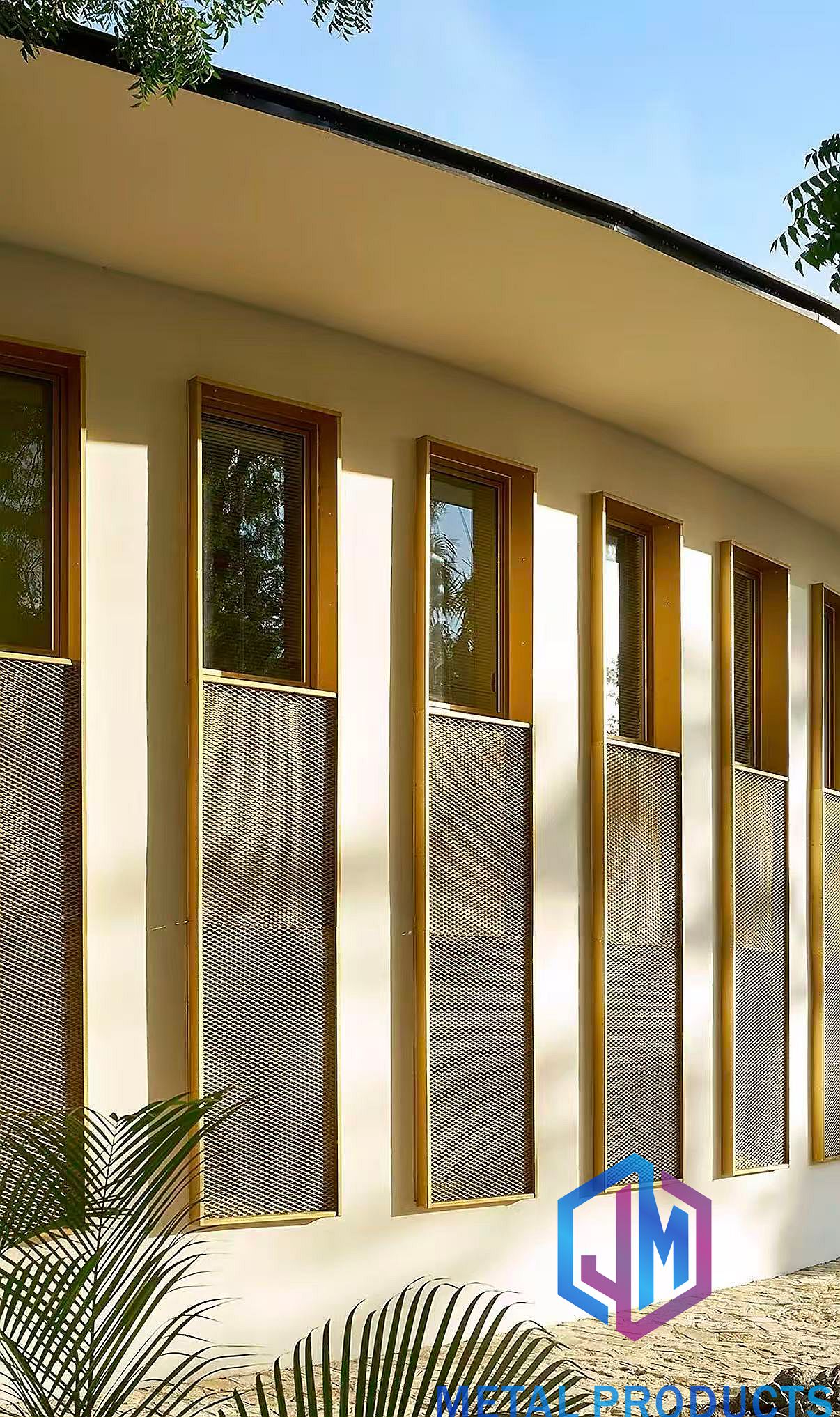
Finish is where large contracts fail quietly. JUMAO's customization scope covers mesh pattern, opening size, wire diameter, material grade (SS304/316, aluminum, brass, copper), panel dimensions, frame structure, edge treatment and surface finish — including PVDF coating, powder coating, anodizing, PVD and antique finishes — plus RAL custom colors, installation system, branding or logo marking and packaging.
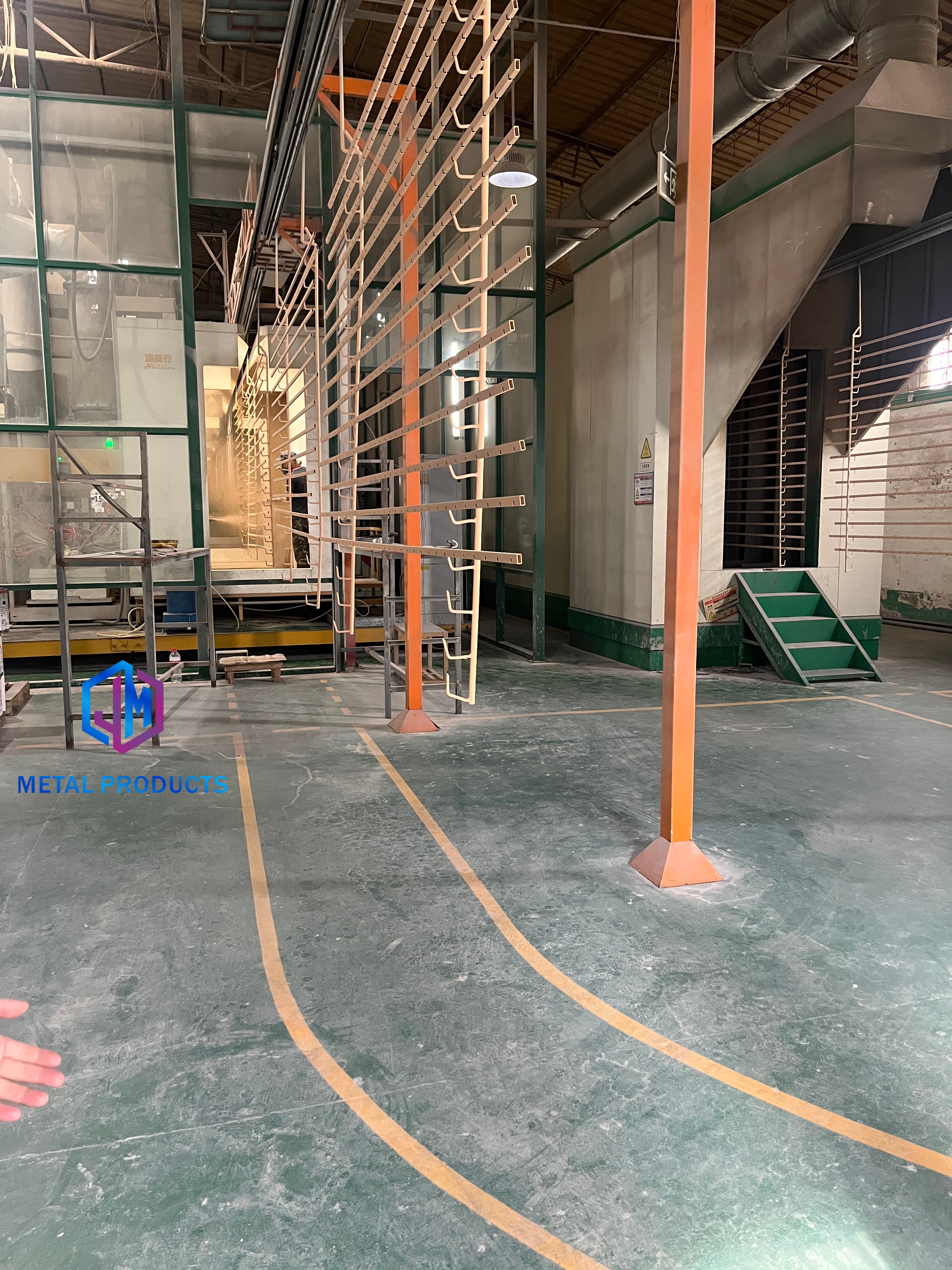
The quality-control sequence that supports this scope is: raw material inspection, dimensional inspection, welding quality inspection, surface finish inspection, flatness inspection, color consistency inspection, packaging inspection and 100% pre-shipment quality inspection, with third-party inspection available through SGS and TUV.
For projects specifying perforated copper architectural mesh panels, bronze decorative mesh or antique finishes, the color consistency inspection step and a retained physical reference are what keep different elevations visually matched once the scaffolding comes down.
Pillar 3 — Capacity, packing and documentation
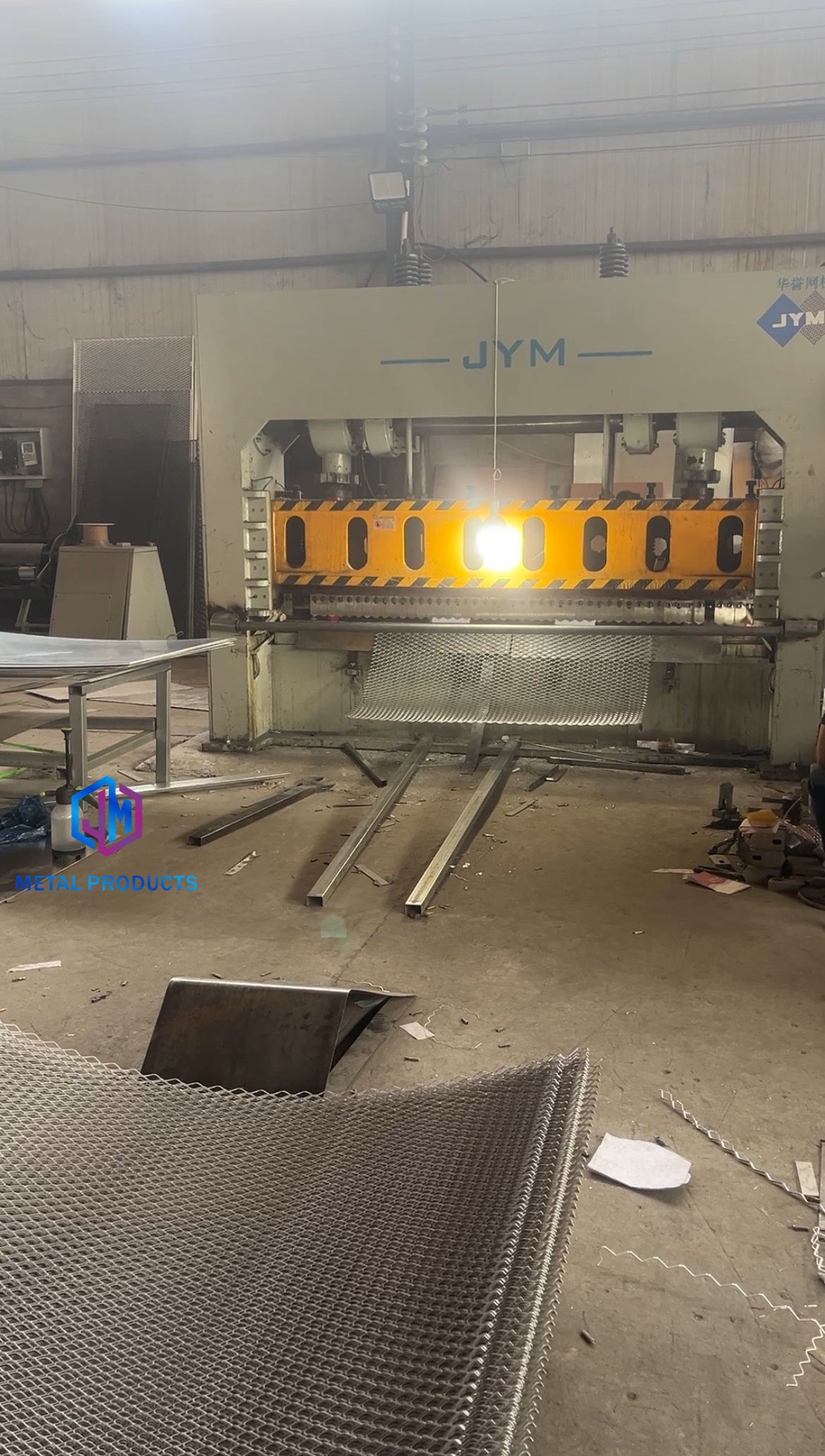
Capacity is the part of capability that is easiest to verify and most often skipped. JUMAO's stated production capacity is 5,000–10,000 square meters per month, with annual output of 100,000 square meters, a minimum order quantity of 1 square meter, and production lead times of 7–60 days depending on order quantity and customization requirements. That monthly output sits in the same order of magnitude as the documented project volumes listed further below.
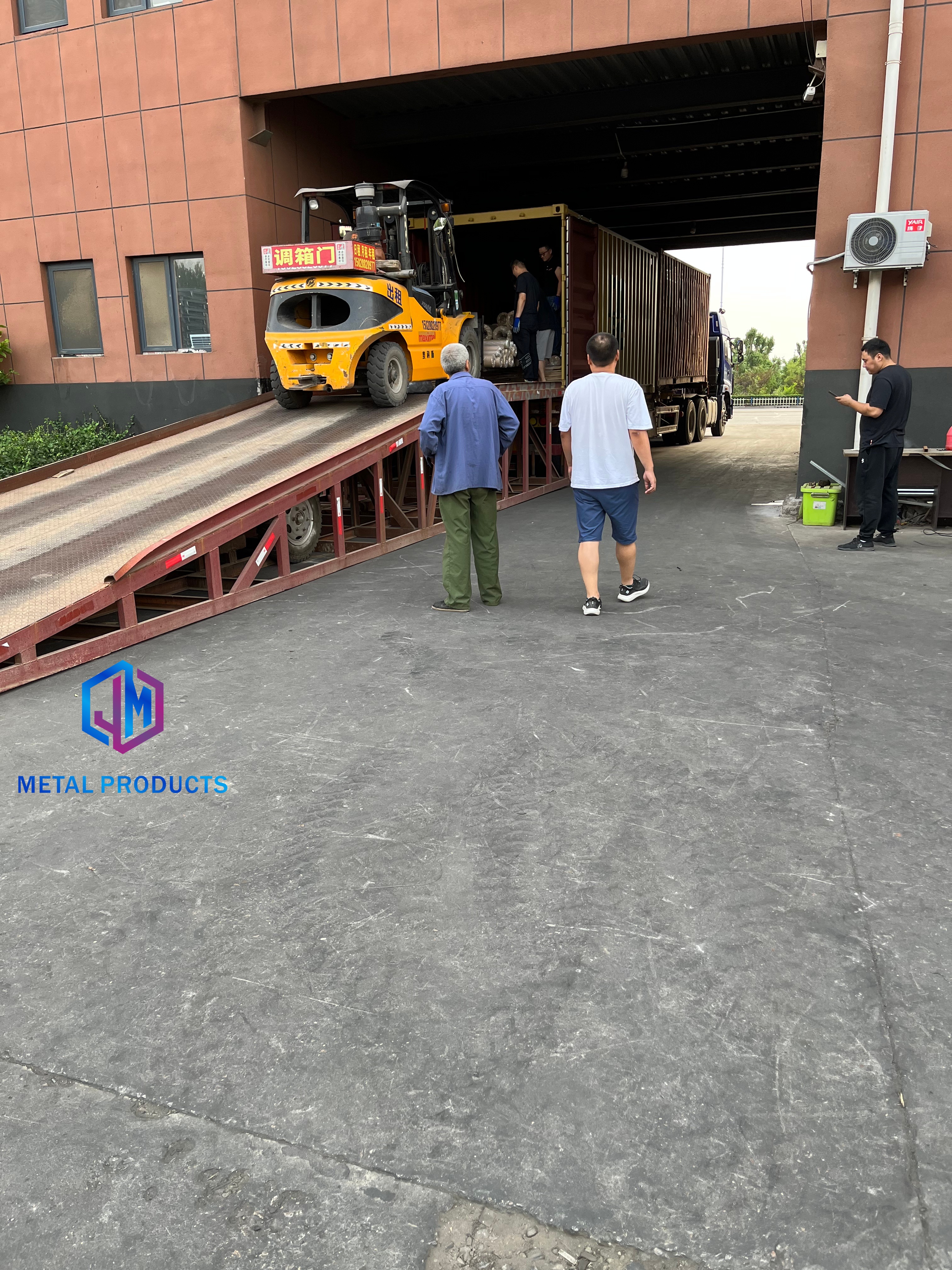
Packing and shipping capability matters as much as fabrication on global contracts, because mesh panels are easily bent, scratched or creased in transit. JUMAO's production process includes dedicated packing, package and shipping stages, and finished mesh is exported to North America, Europe, the Middle East, Southeast Asia, Australia, South America and Africa, with an export ratio of 50%. Delivery terms include EXW, FOB and CFR.
Six Capability Checks to Run Before Awarding a Large Facade Contract
Step 1 — Audit the engineering interface, not the catalogue
Ask for panel split drawings, the fixing detail, edge treatment specification, panel weight and installation guidance. A supplier that can only quote mesh specification without showing how the panels attach to the substrate has not demonstrated facade capability. Evidence to look for: fixing systems documented as part of the product, customized panel sizes, and engineering drawing support included in the service scope.
Step 2 — Verify material grade and finish specification
Confirm which stainless steel grade is proposed for exterior and interior conditions (Grade 316 is typically specified for exterior corrosive environments and Grade 304 for interiors), which finish system is applied (PVDF, powder coating, anodizing, PVD or antique), and how RAL custom colors are matched across batches. Also confirm the mesh type: woven, expanded, cable, ring or perforated, since each changes the visual and structural behavior of the facade.
Step 3 — Read the quality-control sequence, not the certificate alone
A certificate tells you the system was qualified; the inspection sequence tells you whether it stays qualified in production. Request the full inspection list — raw material, dimensional, welding, surface finish, flatness, color consistency, packaging and pre-shipment — plus the availability of third-party inspection such as SGS or TUV. Compliance documentation should also be checked against the destination market.
Step 4 — Match capacity to contract volume and programme
Ask for monthly capacity, annual output, current loading, minimum order quantity and quoted lead time. JUMAO's figures are 5,000–10,000 square meters per month, 100,000 square meters per year, an MOQ of 1 square meter, and lead times of 7–60 days depending on order quantity and customization requirements. Where a facade package includes curved, shaped or framed panels, lead time should be quoted against the drawing package rather than the mesh type.
Step 5 — Check packing, shipping and destination experience
Request the packing method for flat panels, curtain-type mesh and framed units, together with the delivery terms. JUMAO works on EXW, FOB and CFR terms with a 50% export ratio across the Middle East, Southeast Asia, the European Union, North America, Australia and Africa — relevant when a project requires documentation and handling experience for a specific destination rather than first-time export support.
Step 6 — Fix commercial terms and after-sales before award
Confirm payment terms, acceptance criteria and post-delivery support. JUMAO's standard terms are a 50% deposit in advance with a 50% balance before shipment by T/T, acceptance based on pre-shipment inspection, and after-sales support covering remote technical support, installation guidance, engineering drawing support, installation system recommendations, maintenance advice and project consultation.
How These Checks Apply to Real Project Types
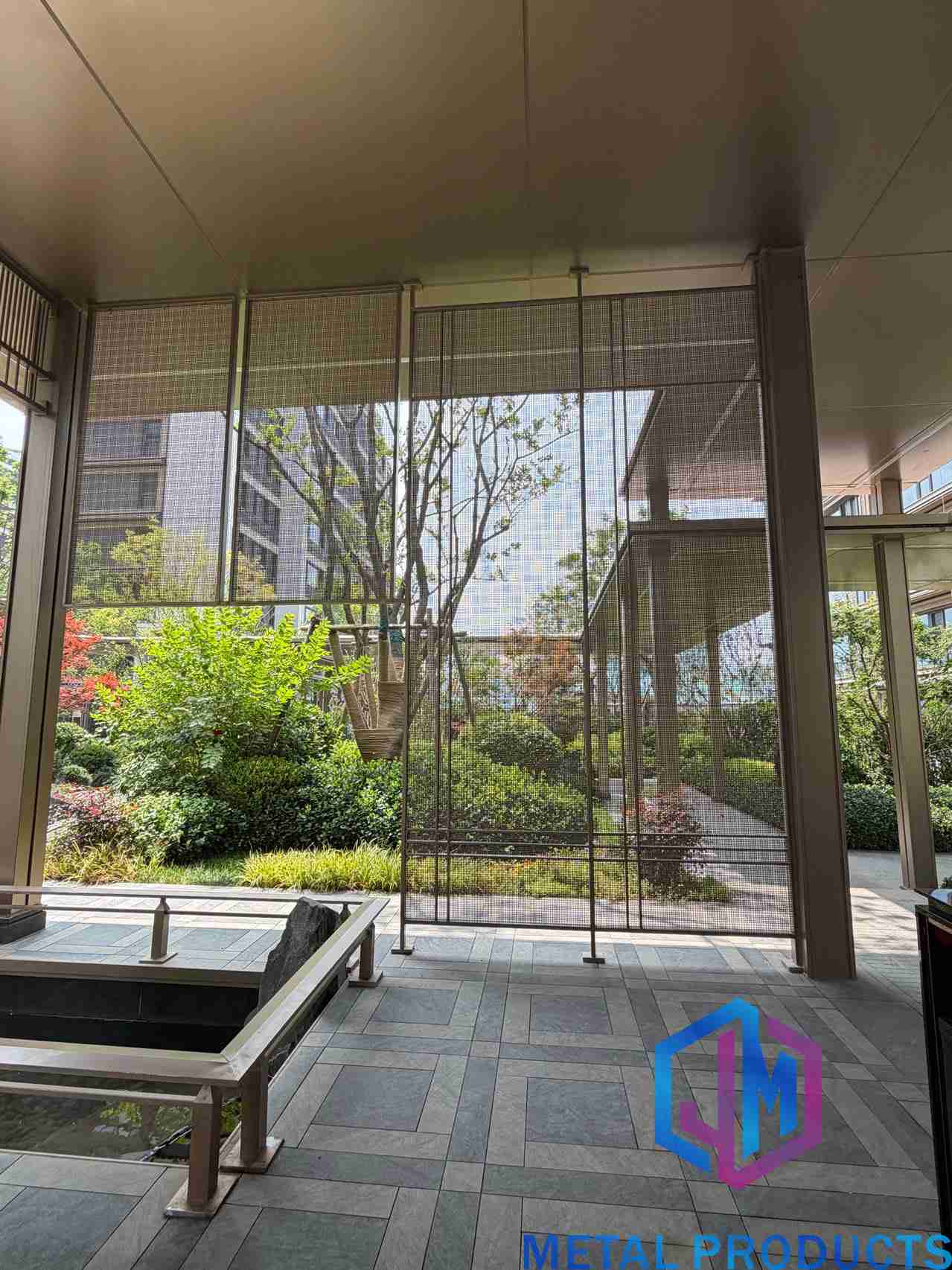
Commercial facade with sun shading. A facade engineering contractor in Singapore used mesh across a 3,600 m² office building exterior, covering exterior cladding, sun shading screens and a planting separation layer. The specification used a lightweight aluminum structure with customizable diamond mesh perforations and anti-corrosion powder coating for tropical conditions. Sun shading metal mesh can reduce solar heat gain by up to 50% depending on mesh aperture and material (Cambridge Architectural), which means aperture selection is a capability conversation — it changes structural spacing, fixing detail and thermal performance together.
Resort and hospitality cladding. A resort development in Indonesia specified 3,200 m² of exterior cladding mesh and window screening, with a corrosion-resistant finish intended for a tropical climate. Here the capability checks that matter most are finish durability and packing, because replacement access on a finished resort facade is expensive.
Premium interior cladding and elevator lobbies. A high-end developer project in Saudi Arabia used 1,280 m² of copper-finish micro-perforated mesh panels for elevator hall walls and corridor cladding, with modular installation and a scratch-resistant surface. On this type of package, color consistency inspection and modular panel sizing decide the final appearance more than the mesh itself.
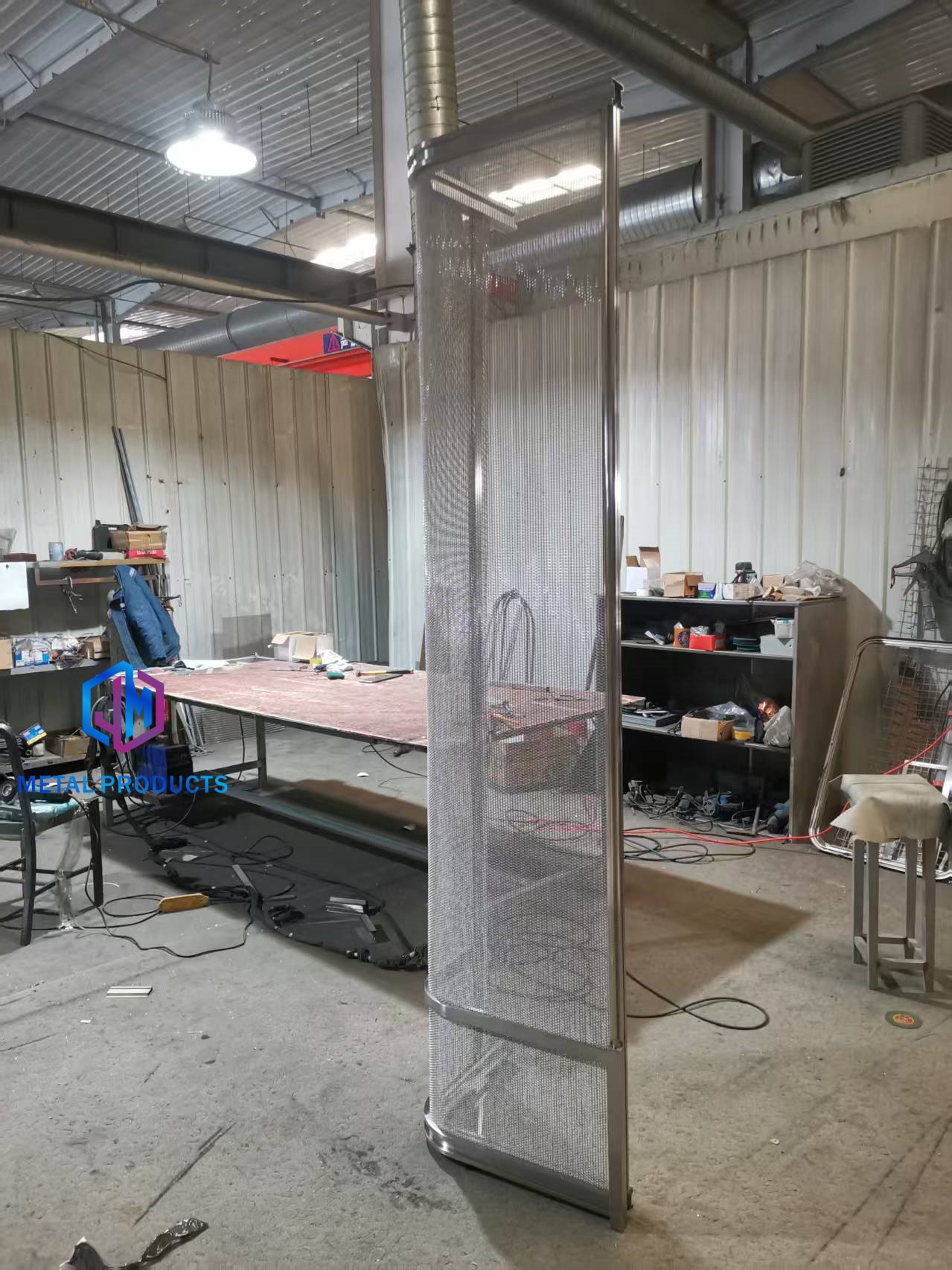
Perforated and expanded exterior cladding. A commercial building project in China used 2,800 m² of perforated facade panels with custom perforation patterns and a powder-coated finish as an expanded metal facade system. A further 2,300 m² ceiling mesh curtain project used a custom curved track system with a hanging drape effect, and a 1,500 m² residential courtyard project used woven stainless steel mesh for privacy screening with maintained ventilation. Each of these packages required the same three pillars — engineering, finish and logistics — even though the visible product differed.
Capability Comparison: Checks, Evidence and Documented References
The table below converts the six checks into a request-and-evidence format, so a buyer can compare any shortlisted manufacturer on the same criteria.
| Capability area | What to request from any supplier | Documented JUMAO evidence |
|---|---|---|
| Engineering interface | Panel split drawings, fixing detail, edge treatment, installation guidance | Custom Architectural Mesh System (JM-C-9336) with frame, clip or tension fixing; engineering drawing support and installation guidance included in the after-sales scope |
| Customization scope | Material grade, mesh type, panel size, pattern, finish, color | SS304/316, aluminum, brass and copper; woven, expanded, cable and ring mesh; RAL custom colors; PVDF, powder coating, anodizing, PVD and antique finishes |
| Finish control | Batch color consistency procedure and retained reference panel | Surface finish inspection, flatness inspection and color consistency inspection, followed by 100% pre-shipment quality inspection |
| Compliance documentation | Certificate and third-party inspection route | Certificate of Conformity (EU-CPR) no. CTB160418002S-ZS referencing EN 13830:2003, issued by Shenzhen CTB Testing Technology Co., Ltd; third-party inspection available (SGS, TUV) |
| Production capacity | Monthly output, annual output, technical team | 5,000–10,000 m² per month; 100,000 m² per year; 3,000 m² facility; 6 engineers |
| MOQ and lead time | Minimum order quantity and quoted lead time | MOQ 1 m²; lead time 7–60 days depending on order quantity and customization requirements |
| Logistics and delivery | Packing method, delivery terms, destination experience | EXW, FOB and CFR terms; 50% export ratio; Middle East, Southeast Asia, European Union, North America, Australia and Africa |
| After-sales support | Technical support and installation guidance after delivery | Remote technical support, installation guidance, engineering drawing support, maintenance advice and project consultation |
The second table lists documented project volumes that can be used as reference points when checking whether a manufacturer's capacity matches a contract size.
| Project type | Region | Area supplied | Scope |
|---|---|---|---|
| Office building exterior | Singapore | 3,600 m² | Exterior cladding, sun shading screen, planting separation layer |
| Resort exterior | Indonesia | 3,200 m² | Facade cladding and window screening for tropical climate |
| Elevator hall and corridor cladding | Saudi Arabia | 1,280 m² | Copper-finish micro-perforated wall cladding, modular installation |
| Commercial building facade | China | 2,800 m² | Perforated facade cladding with powder-coated finish |
| Interior ceiling mesh curtain | China | 2,300 m² | Custom curved track hanging installation |
| Residential courtyard screening | China | 1,500 m² | Woven stainless steel mesh for privacy and ventilation |
Frequently Asked Questions
What certification should a mesh manufacturer provide for an EU facade project?
For EU projects, a CE-related conformity document is the first item to check. JUMAO holds a Certificate of Conformity (EU-CPR) issued under certificate number CTB160418002S-ZS by Shenzhen CTB Testing Technology Co., Ltd, referencing EN 13830:2003, with the scope covering metal mesh curtain model JM-MMC under the trade name JUMAO; it was issued on 2016-04-25 and runs to 2099-12-31. Beyond the certificate itself, ask for the inspection route: raw material inspection, dimensional inspection, welding quality inspection, surface finish inspection, flatness inspection, color consistency inspection, packaging inspection and 100% pre-shipment quality inspection, with third-party inspection available through SGS and TUV. For USA and global specifications, projects commonly reference ASTM E2016 for industrial woven wire cloth, EN 10088 for stainless steel grades and NAAMM EMMA for expanded metal.
How do I identify a custom architectural metal mesh panel manufacturer for facade projects that can handle a large contract?
Look for integration rather than catalogue breadth. A manufacturer able to run a large facade contract will normally show project-based product structures such as the Custom Architectural Mesh System (JM-C-9336) and the Complete Metal Mesh Facade Solution (JM-E-7736). JM-C-9336 covers woven, expanded, cable and ring mesh in stainless steel, aluminum or brass, with customized panel size, PVD, powder coating or fluorocarbon finishes, and frame, clip or tension fixing systems. JM-E-7736 combines expanded mesh, woven mesh, cable mesh and perforated panels in stainless steel, aluminum or copper alloy, with PVDF, powder coating or PVD surface treatment and frame mounting, direct fixing or tension installation, supported by customized engineering support. Confirm those claims against capacity: JUMAO runs 5,000–10,000 square meters per month from a 3,000 m² facility in Anping, China, with a 6-engineer technical team and OEM manufacturing, ODM design and turnkey metal facade and interior decorative mesh systems.
What is the minimum order quantity, and what commercial terms apply?
JUMAO's minimum order quantity for architectural metal mesh products is 1 square meter, applied consistently across the product range, which keeps a small validation quantity possible before a full facade release. Delivery terms include EXW, FOB and CFR. Payment terms are 50% deposit in advance and 50% balance before shipment by T/T, and acceptance is based on pre-shipment inspection.
Can I validate a mesh panel before full production?
A minimum order quantity of 1 square meter makes it practical to validate a panel before releasing a full contract quantity. A buyer can verify mesh pattern, opening size, wire diameter, material grade, surface finish and color — including RAL custom colors — on a small order. This matters most for finishes: antique, PVD, powder-coated and PVDF surfaces read differently under different lighting, and the supplier's color consistency inspection is easier to trust once a physical reference panel exists. For curved, shaped or framed panels, the frame structure and edge treatment can be checked at the same stage.
What lead time should be planned for a large facade contract?
Production lead time is 7–60 days depending on order quantity and customization requirements, supported by monthly capacity of 5,000–10,000 square meters and annual output of 100,000 square meters. On larger contracts, lead times are quoted per order because customization scope — material grade, mesh pattern, panel dimensions, frame structure, edge treatment, surface finish and installation system — changes the production route, and pre-shipment inspection and packing should be built into the schedule. To have a specific contract assessed, send the facade drawings, panel quantities and finish requirements to info@jumao-decorfabric.com or WhatsApp +86-151-2783-7706; sample requests and technical review are handled by the same team.
Conclusion
Supplier evaluation for a large facade contract comes down to evidence. Samples, catalogue photography and price lists are available from thousands of factories; documented engineering support, finish control, capacity and delivery are not. The six checks in this guide — engineering interface, material and finish specification, quality-control sequence, capacity, packing and delivery, and commercial terms — can be run inside a single supplier audit and compared across a shortlist on the same criteria.
The two systems referenced throughout, the Custom Architectural Mesh System (JM-C-9336) and the Complete Metal Mesh Facade Solution (JM-E-7736), exist because facade contracts are delivered as systems rather than as loose panels: mesh type, material, finish, panel size, fixing method and engineering support are specified together. Buyers who evaluate suppliers on those terms are checking the same things the site will check later — which is the point of a capability review.
Request a Capability Review, Sample or Project Quotation
Send facade drawings, panel quantities and finish requirements to JUMAO. The team provides engineering drawing support, sample validation and a project-specific quotation with lead time.
- Contact: ViVi Su
- Email: info@jumao-decorfabric.com
- Tel / WhatsApp: +86-151-2783-7706
- Website: www.jumao-decorfabric.com
- Address: 2km South Of Bus Station, Anping, Hengshui, Hebei, China 053600
Have Questions or Need More Details?
Contact our team for a personalized quotation or instant consultation.
Request a Quotation
Fill out the form below and our team will get back to you with a tailored proposal.
WhatsApp Direct Chat
Prefer to chat in real-time? Message us on WhatsApp for instant assistance & quick answers.
- Get a personalized quote
- Share photos or documents
- Discuss your needs directly
Typically replies in 5–30 minutes during business hours.