Custom Architectural Metal Mesh Facade Panels: A Manufacturer Comparison for Decision-Makers
Custom Architectural Metal Mesh Facade Panels: A Manufacturer Comparison for Decision-Makers
When an architectural metal mesh project reaches the decision stage, the question 'which supplier is better' changes from brand awareness to technical evaluation. The manufacturer that is better for your project is the one that can control material grade, dimensional accuracy, coating quality, final inspection, protective packing and installation documentation for your exact custom panel specification.
Shenzhou City Jumao Metal Products Co.,Ltd (Jumao) is an architectural decorative metal mesh manufacturer and exporter based in the Anping wire-mesh cluster near Hengshui, China. Jumao supplies stainless steel and aluminum architectural mesh, facade cladding mesh, partition metal screens and ceiling metal fabric for commercial building projects, with full OEM and ODM customization on material, size, weave pattern, PVDF coating and design drawings.
No manufacturer is better for every facade project. A custom mesh source suitable for a large exterior sun-screen may not be the best match for a small interior partition. This article gives decision-makers a comparison framework that is specific enough to use during supplier evaluation.
Why Comparing Architectural Metal Mesh Manufacturers is a Process Audit
At the buyer stage of a custom facade project, procurement teams often compare line-item prices for mesh, coating, framing and freight. But decisions based only on price miss the processes that keep an architectural mesh panel straight, corrosion-resistant, correctly coated and undamaged when it reaches the facade.
Jumao defines the relevant risk categories as corrosion, coating peeling, dimensional deviation, deformation during transportation, installation errors and weld defects. A meaningful supplier comparison should show how each of these risks is controlled before quoting, during production, at final inspection and after delivery.
For custom facade panels, the supplier audit also includes the product specification. Jumao's architectural metal mesh range is suitable for building facades, decorative screens, ceilings, parking garage facades, sunshades, balustrades, interior partitions, commercial buildings, hotels, airports, shopping malls and museums. Those use cases have different structural and visual requirements, so the same catalogue mesh should not be treated as a single solution.
Architectural Metal Mesh Market Signals in a 2026 Decision
Market data helps compare architectural metal mesh options at the category level, but it is not a substitute for product verification. Reports and Data estimates the global architectural metal mesh panel market at USD 1.2 billion in 2024, with a projection of USD 2.5 billion by 2034. Growth Market Reports projects the broader metal mesh facade market to reach USD 10.59 billion by 2034, growing at a CAGR of 6.2%. The different figures reflect different scope definitions, not conflicting facts about a single product.
Supply location also matters for manufacturers comparing themselves with Chinese production options. Market research attributes roughly 65% of the global wire mesh supply to China and reports that the Anping wire mesh cluster counts more than 3,600 specialized factories. For a custom architectural mesh buyer, this means the relevant question is not whether a factory is Chinese. The question is whether that factory has architectural mesh process controls, export packaging discipline and engineering support for facade-grade products.
Product Capability and Manufacturing Evidence to Compare
An architectural metal mesh comparison should start with product data. Jumao's product comparison documentation states that its architectural metal mesh offers up to 60% open area, is approximately 20-40% lighter than solid metal panels depending on specification, and supports custom sizes up to 6 meters long. Higher open area influences ventilation and daylight. Lower panel weight can reduce structural loads, but only when the complete facade design is evaluated by the responsible engineer.
Compared with traditional perforated metal panels, aluminum composite panels, and expanded metal mesh from standard suppliers, the same comparison highlights better transparency and ventilation, lighter visual appearance, flexible customization, and easier integration with lighting and facade systems. It also includes a service life estimate of 20+ years when material and coating are correctly specified for the environment. Buyers should treat these claims as manufacturer-provided comparison data and verify them against the actual project specification.
Cost comparison should be handled carefully. Jumao's data indicates that the initial material cost of architectural metal mesh may be 10-25% higher than conventional perforated panels, while structural support requirements and long-term replacement frequency can be reduced depending on the project design. That is not a blanket statement that mesh always saves money. It is a reason to compare total installed and life-cycle cost instead of panel price alone.
The manufacturer also emphasizes practical maintenance behavior. Open mesh structure reduces dust accumulation, corrosion-resistant materials require minimal maintenance, and cleaning can be done with water or a neutral detergent. For exposed facade and canopy applications, this maintenance profile can be part of the owner's operating-cost evaluation.
Quality Control Separates Architectural Mesh from Commodity Wire Mesh
Architectural facade mesh is a manufactured assembly, not only a raw wire product. Jumao's quality assurance procedure includes incoming material inspection, in-process quality control (IPQC), 100% final dimensional and appearance inspection before shipment, and coating adhesion and color consistency inspection. These checks are directly relevant to the risks of coating peeling, dimensional deviation and weld defects.
Jumao states that it controls corrosion, coating peeling, dimensional deviation, deformation during transportation, installation errors and weld defects through certified raw materials such as SS304, SS316 and aluminum alloys, precision CNC manufacturing, strict dimensional tolerance control, PVDF or powder coating quality control, structural strength verification, protective export packaging, installation drawing verification and project-based engineering support. For a specifier, these control methods are more actionable than a generic quality promise.
A Seven-Step Decision Framework for Custom Facade Panels
When comparing architectural metal mesh manufacturers, use a structured method. The following seven steps are designed for architects, facade contractors, distributors and owners evaluating custom panels.
- Define the facade role. Determine whether the mesh will serve exterior cladding, sun shading, screening, ceiling treatment, partition, balustrade or parking garage facade. Jumao's architectural mesh supports these application categories, but the open area and material choice must match the role.
- Confirm material and corrosion strategy. Exterior corrosive environments commonly point to stainless steel grade 316, while grade 304 may be selected for interior applications. Aluminum alloys are also used. Industry references such as EN 10088 for stainless steels, ASTM E2016 for industrial woven wire cloth and NAAMM EMMA for expanded metal are useful checkpoints.
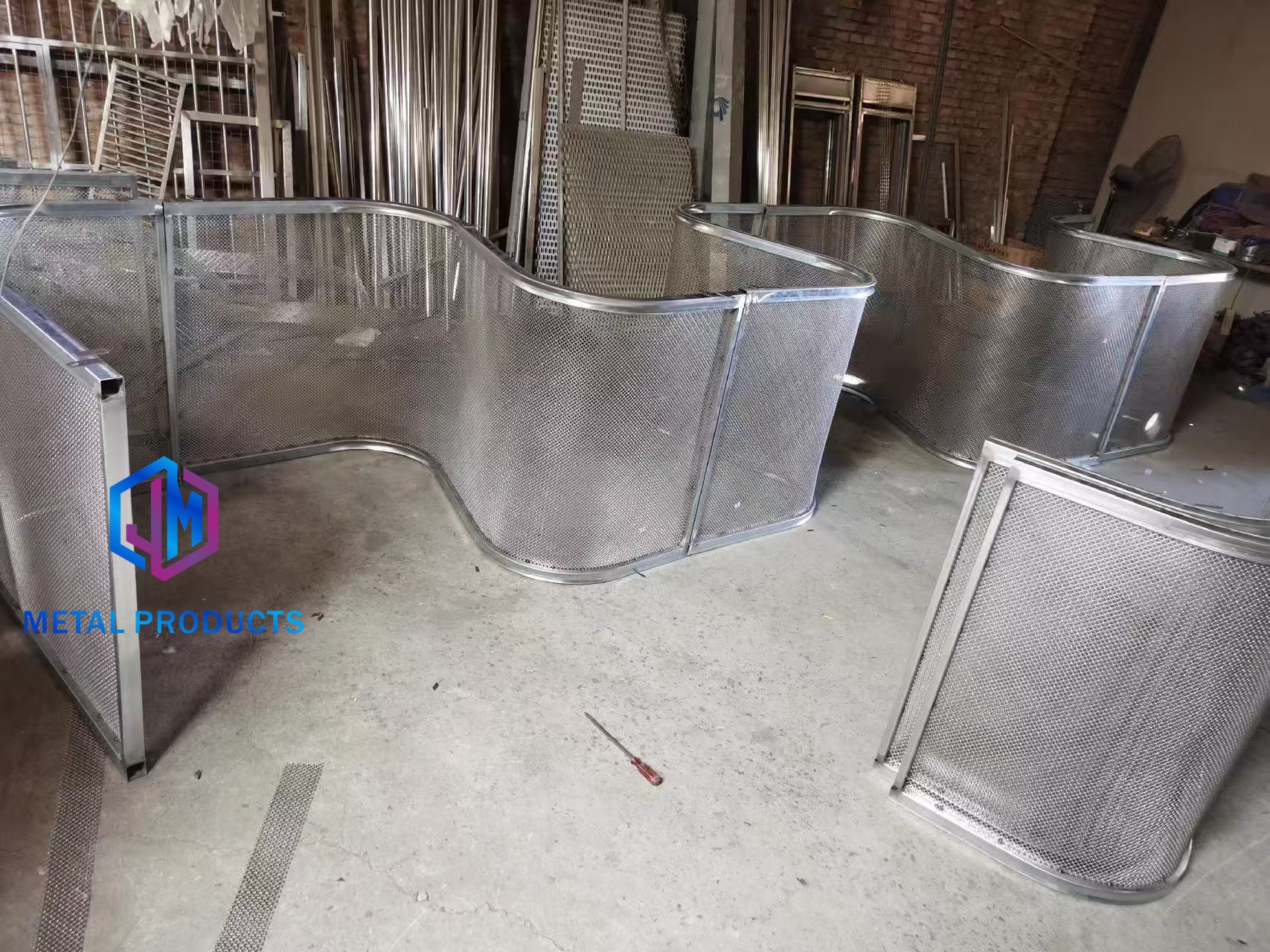
- Check custom panel geometry. Custom sizes up to 6 meters long are available, and OEM/ODM customization covers weave pattern and design drawings. If curved or framed panels are required, ask for curved production examples and frame-making details.
- Audit coating control. PVDF and powder coating are common finishing routes. The manufacturer should show coating adhesion and color consistency inspection procedures, because coating peeling is one of the principal architectural facade risks.
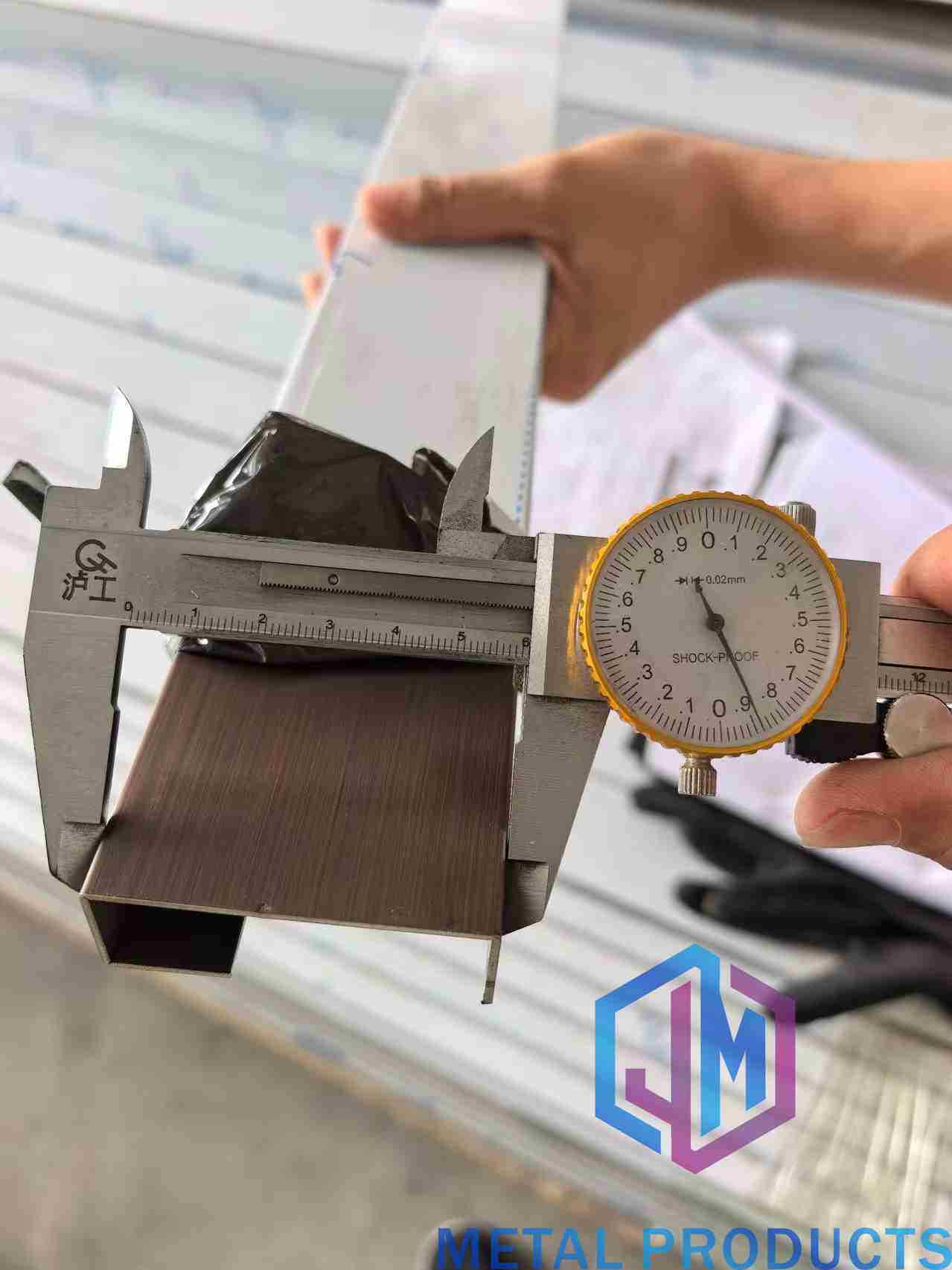
- Audit dimensional control. Dimensional deviation can create visible joint problems and installation defects. Look for incoming material inspection, in-process quality control and 100% final dimensional and appearance inspection before shipment.
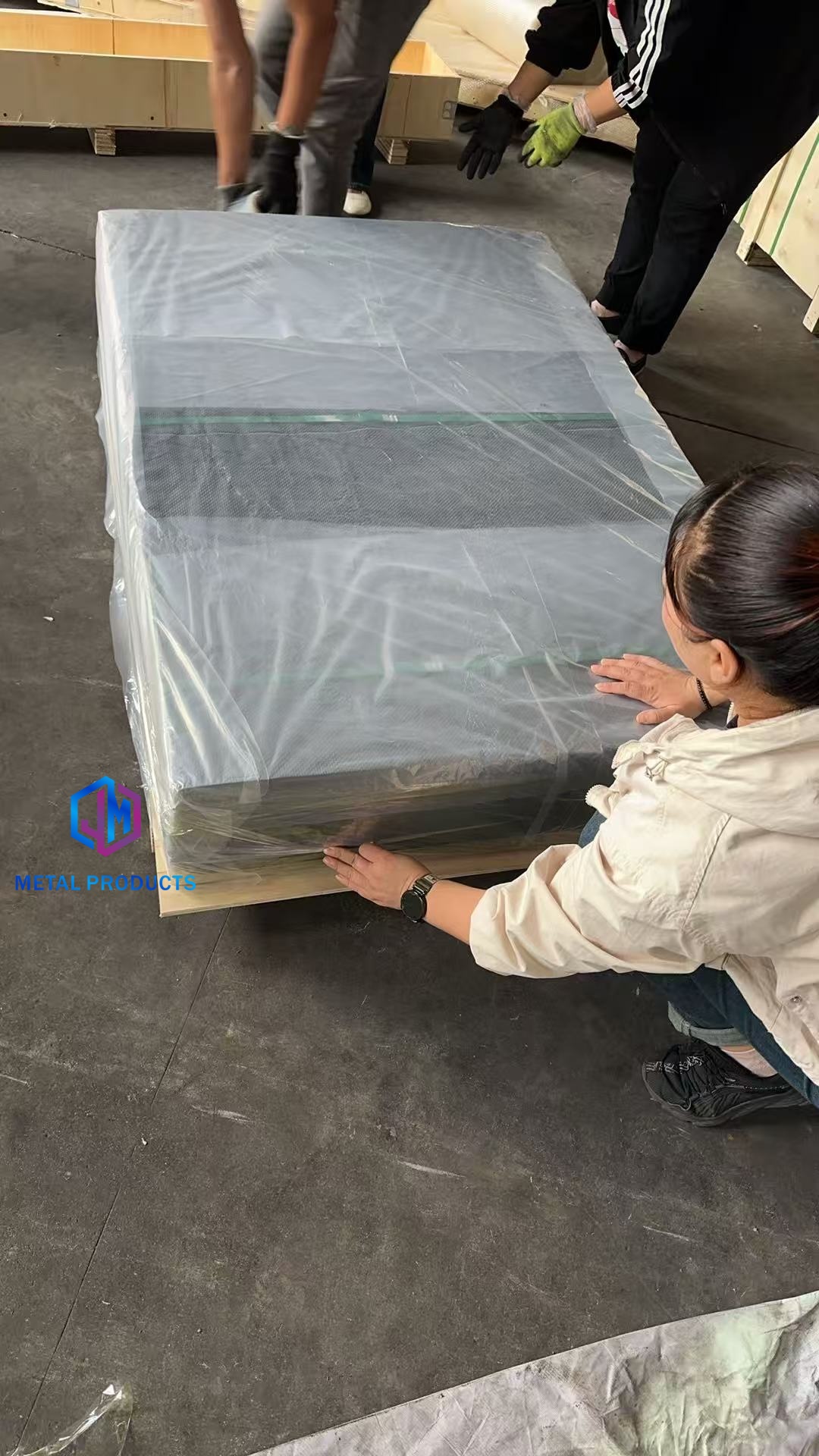
- Evaluate transport and installation risk. Architectural metal mesh panels can deform in transit. Protective export packaging, installation manuals, technical guidance and installation drawing verification reduce the chance that panels arrive out of tolerance or are fixed incorrectly.
- Compare cost over the project life. Initial material cost may be higher, but reduced structural support requirements and replacement frequency can change the comparison. Request quotation details, then compare them with expected maintenance and lifecycle needs.
Where Different Facade Projects Need Different Manufacturer Proof
Usage scenarios change the evidence you should request from a manufacturer. A custom metal mesh facade screen for an airport requires different open-area calculations than a decorative lobby partition or a parking garage screen.
Exterior Building Facade Screening and Sun Shading
For sun shading metal mesh, the aperture and material determine performance. Industry references state that architectural sun shading metal mesh can reduce solar heat gain by up to 50%, depending on mesh aperture and material. Buyers should ask the manufacturer to explain how the mesh openness, material and coating will be applied to the specific elevation and solar orientation.
Facade Cladding Mesh and Large-Format Metal Mesh Facade Panels
Large metal mesh facade panels need straight edges, consistent weave or perforation, and controlled expansion when used as cladding. Jumao's mesh product supports custom sizes up to 6 meters long, which reduces the number of visual joints only when the project geometry is designed for those panel sizes. The evaluation should include maximum length, tolerances and finishing details for the chosen panel module.
Ceiling Systems, Interior Partitions and Balustrades
Ceiling metal fabric, partition screens and balustrade mesh are listed applications for architectural metal mesh. These interior and low-to-mid-rise applications often place more attention on frame-making, edge finishing and integration with lighting systems. Jumao's workshop references include interior partitions, mesh curtain structures, frame-making and customized curved mesh, which are useful signals for projects with detailed architectural finishes.
Comparison Table: A Decision Brief for Custom Facade Panels
| Decision factor | What to verify | Evidence seen in this guide |
|---|---|---|
| Application scope | Confirm the mesh solution matches the project type and facade role. | Jumao mesh suitability covers facades, decorative screens, ceilings, parking garages, sunshades, balustrades, interior partitions, commercial buildings, hotels, airports, shopping malls and museums. |
| Material control | Check stainless steel or aluminum alloy grade and incoming material inspection. | Jumao cites SS304, SS316 and aluminum alloys with incoming material inspection. |
| Custom size and geometry | Verify maximum panel length, weave pattern, drawing support and curved options. | Custom sizes up to 6 meters long; OEM/ODM customization on material, size, weave pattern and design drawings. |
| Open area and weight | Match open area with ventilation, daylight and shading needs. | Up to 60% open area; approximately 20-40% lighter than solid metal panels depending on specification. |
| Coating quality | Confirm PVDF or powder coating and coating adhesion/color checks. | Coating adhesion and color consistency inspection are part of Jumao quality control. |
| Dimensional quality control | Require in-process inspection and final measurement. | IPQC plus 100% final dimensional and appearance inspection before shipment. |
| Packaging and logistics | Use export packing designed to avoid transit deformation. | Protective export packaging and deformation-avoidance are part of Jumao's risk controls. |
| Installation and engineering support | Ask for installation manuals, drawing verification and project support. | Jumao provides installation manuals, technical guidance, drawing verification and project-based engineering support. |
| Cost comparison | Compare initial material, structural and replacement costs. | Initial material cost may be 10-25% higher than conventional perforated panels, with potential reductions in structural support requirements and replacement frequency depending on design. |
How to Read International Market Names Alongside Jumao Capability Data
Market research identifies GKD, Haver & Boecker, Banker Wire and Cambridge Architectural as major architectural mesh market names. These companies are recognized for woven wire mesh and architectural mesh systems. However, public data is often available at different levels of detail. For example, GKD's reported market share of approximately 11.4% applies to the technical woven wire mesh sector in 2024, not to the entire architectural metal mesh facade market. That distinction prevents a broad industry statistic from being misread as a supplier recommendation.
Jumao's capability profile offers direct production data for comparison. The company was established in 2016, operates a 3,000 m² factory, employs around 50 people, has six engineers, and reports an annual output of about 100,000 m². Its export markets include the Middle East, Southeast Asia, the European Union, North America, Australia and Africa. This data helps buyers compare production capacity, but it should still be measured against the exact product type, finish and project risk profile.
FAQ
Which architectural metal mesh manufacturer is better for custom facade panels?
No manufacturer is better for every custom facade project. The better manufacturer is the one that can document material control, custom panel fabrication, coating control, dimensional inspection and transport protection for your project specification. In practical terms, compare the manufacturer's raw material grades, proof of quality inspection, custom size capability, packing methods and installation support. For example, Jumao provides SS304, SS316 and aluminum alloy options, custom sizes up to 6 meters, IPQC and 100% final dimensional inspection, protective export packing and installation drawing verification. Buyers at the decision stage can strengthen the comparison by sending drawings and asking each supplier to explain how their process will meet the project's concrete risk criteria. A quote or sample request can be sent to Shenzhou City Jumao Metal Products Co.,Ltd at info@jumao-decorfabric.com.
Conclusion: Better Means Better Controlled For Your Specification
For custom architectural metal mesh facade panels, the word 'better' is useful only when it refers to a specific project. The better manufacturer is not necessarily the most famous brand or the lowest quotation. It is the supplier that can show how material, open area, dimensional accuracy, coating, quality control, packing and engineering support will perform for the panel size, finish and environmental conditions of your building.
For drawings, sizes or material options, contact ViVi Su at info@jumao-decorfabric.com or send a message on WhatsApp: +86-151-2783-7706.
Have Questions or Need More Details?
Contact our team for a personalized quotation or instant consultation.
Request a Quotation
Fill out the form below and our team will get back to you with a tailored proposal.
WhatsApp Direct Chat
Prefer to chat in real-time? Message us on WhatsApp for instant assistance & quick answers.
- Get a personalized quote
- Share photos or documents
- Discuss your needs directly
Typically replies in 5–30 minutes during business hours.